

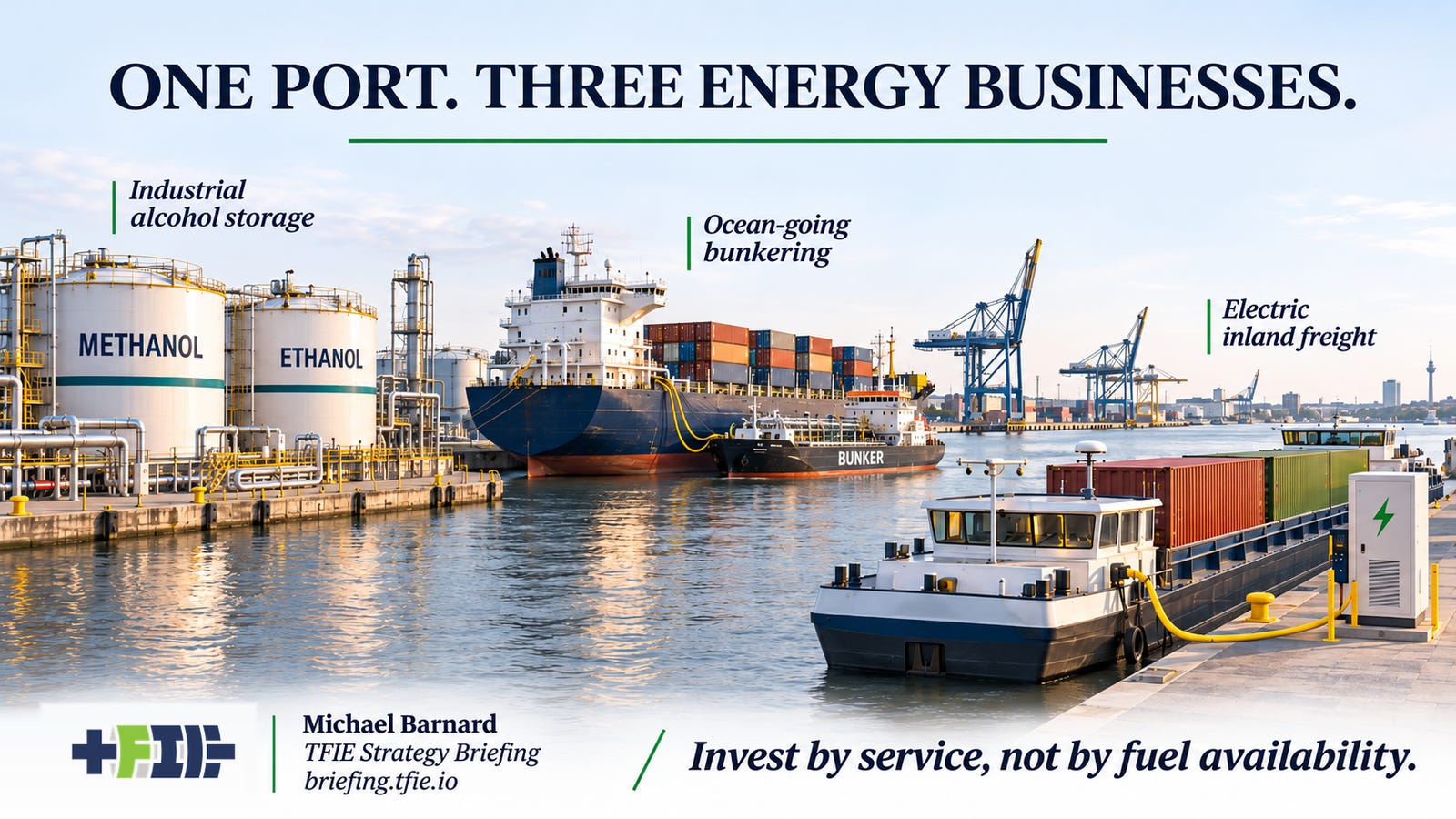
In May 2026, an inland bunker barge delivered two alcohol fuels to an ocean-going container ship in Rotterdam. Tankmatch’s MTS Experience supplied certified biomethanol and second-generation ethanol separately to X-Press Feeders’ Eco Levant, where they were blended into a fuel mix of 90% methanol and 10% ethanol. It was Rotterdam’s first ethanol bunkering of a seagoing vessel. The vessel subsequently operated on the blend, demonstrating the compatibility of the two alcohol fuels in a commercial marine propulsion application.
Two months earlier, Evos and the Port of Rotterdam Authority had announced an expansion at Europoort: five additional methanol and ethanol storage tanks with 67,500 m³ of capacity and a new inland-shipping berth, including shore power, scheduled for completion in early 2028. The tanks will serve industrial customers and marine-fuel markets. The berth will support liquid-cargo transshipment. Its shore-power connection serves berthed vessels and has not been specified as a propulsion charger.
These developments fit the maritime energy transition I have been projecting. I revised my earlier view of biomethanol after examining competition for sustainable liquid-fuel feedstocks. Aviation has strong reasons to secure oils and other feedstocks suitable for sustainable aviation fuel, while shipping can use alcohol fuels produced from different resources. Biomethanol has an important role in the smaller liquid-fuel market remaining after electrification and changing cargo demand reduce shipping’s overall fuel requirement. Ethanol complements methanol in compatible fuel systems.
I developed those conclusions in my biomethanol reassessment and my analysis of hybrid ships using alcohol-capable generators as range extenders. Hybrid electric propulsion with alcohol-fuel generators offers a way to reduce liquid-fuel consumption while retaining long-range operating capability. Direct electric propulsion can serve much of the remaining shorter-range work.
The MTS Experience delivered methanol and ethanol as cargo. Its propulsion system is a separate question. The same distinction applies to inland chemical tankers carrying alcohols to industrial customers. A port can develop a substantial alcohol-fuel business without building a corresponding multi-fuel propulsion system for its inland fleet.
Fuel production also matters. Conventional methanol made from natural gas carries substantial lifecycle emissions. Biomethanol’s emissions depend on feedstock, production process and energy inputs. Synthetic e-methanol requires low-emission electricity, hydrogen production and a suitable carbon source, with significant conversion losses. Rotterdam’s 67,500 m³ expansion is storage capacity, not annual fuel sales or verified low-carbon production. Biomethanol bunkering increased from about 3,900 tonnes to almost 12,000 tonnes in 2025, meaningful growth from a small base within Rotterdam’s much larger marine-fuel business.
International bunkering has a legitimate need to accommodate different fuels. Seagoing vessels operate across international routes, regulatory regimes and service patterns, and their owners have committed capital to different propulsion technologies. A November 2026 Lloyd’s Register assessment identified 1,942 alternative-fuel-capable ships on order worldwide at the start of the year. LNG bunkering was available at 222 ports, methanol at 25 and commercial ammonia bunkering had occurred at one. Those figures show both the scale of fuel diversification in the orderbook and the uneven development of supporting infrastructure.
Ports need credible customers, contracted demand and sufficient utilization before committing to expensive new fuel systems. Los Angeles and Long Beach have adopted a staged approach in their October 2026 Clean Marine Fuel Feasibility Assessment. They identified LNG and methanol as near-term commercial options for visiting ocean-going ships, retained existing LNG ship-to-ship arrangements, examined adapting liquid-fuel infrastructure for methanol and prioritized demonstrations before major new commitments.
In my assessment of the California ports, I argued that safe fuel delivery and sustained commercial demand are different achievements. A successful pilot establishes operational capability. Recurring customers and fuel contracts establish the basis for investment. Rotterdam is further along, with an established industrial alcohol market, growing biomethanol bunkering and additional storage under development. Both cases require the same discipline: contracted demand, infrastructure utilization, delivered fuel costs and verified lifecycle emissions.
What does this mean for the inland vessels serving these ports? Why does the evidence favour battery electrification over competing fuel pathways, and what engineering challenges remain? The rest of the assessment examines route energy, vessel architectures, the CCNR’s technology-neutral framing and the investment choices facing port authorities. Subscribe for free to continue reading.