

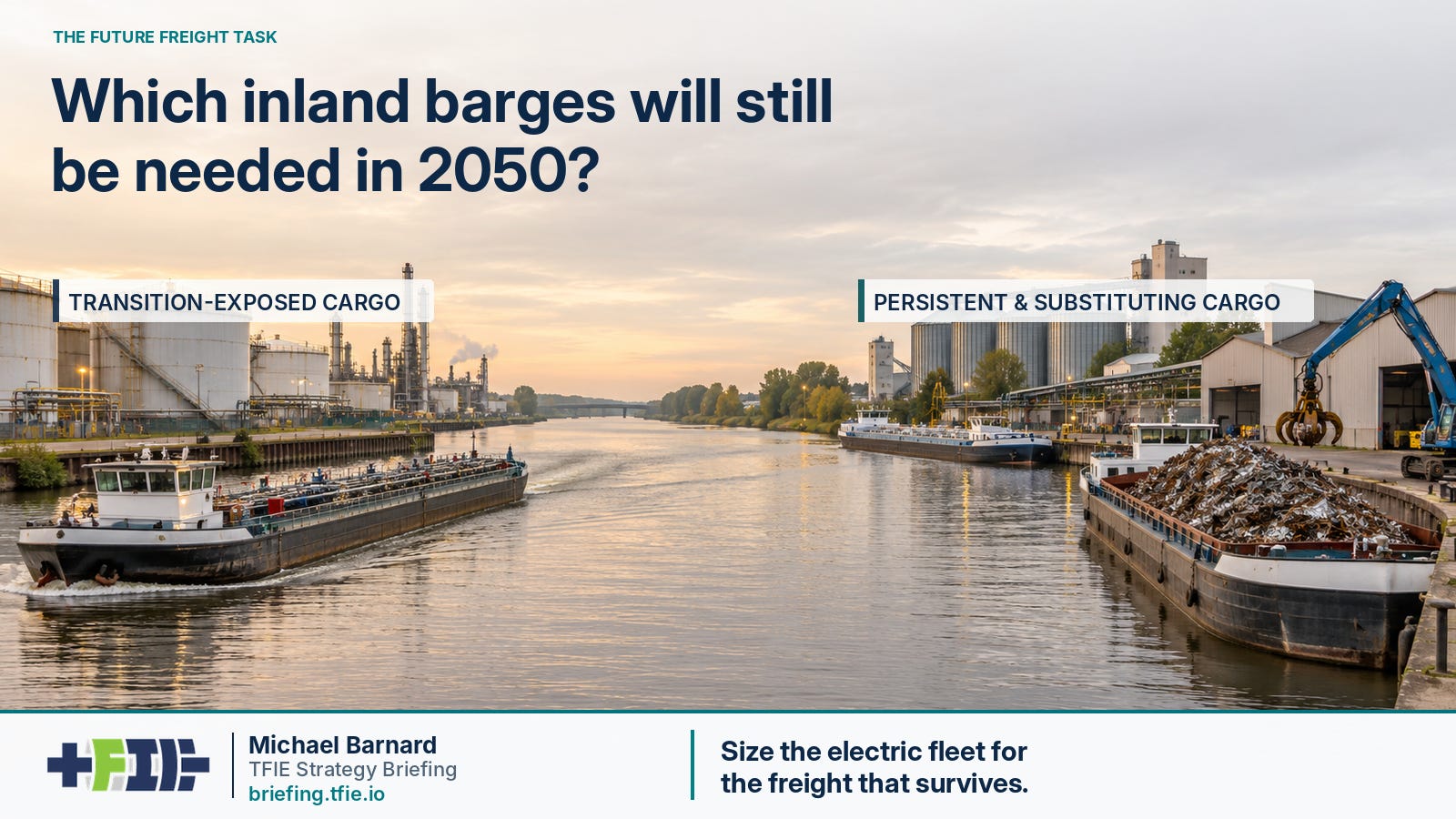
Coal is having a good year in Rotterdam. During the first nine months of 2026, the port reported a 15.3% increase in coal throughput compared with the same period in 2025. Some of that reflected recovering coking-coal shipments for steelmaking, while higher gas prices and electricity-market conditions supported thermal-coal demand. Crude oil and petroleum-product throughput also increased. The Port of Rotterdam’s latest figures are a reminder that the energy transition does not proceed through a smooth, annual decline in every fossil-fuel commodity.
Imagine an inland vessel owner approaching an engine replacement decision. The vessel has been carrying coal or petroleum products, and this year’s freight market might support another investment in conventional propulsion. A replacement engine could operate for decades. The cargo market supporting that investment might look very different in 2040 or 2050. Another operator carrying construction minerals, chemicals, agricultural products or scrap could face an entirely different outlook. Both owners have to make decisions about propulsion, but first they need to understand which freight services are likely to persist.
The latest European evidence makes this question important without providing a single answer. Eurostat reported that inland-waterway freight transport fell 3% in 2025, to 118 billion tonne-kilometres. Metal ores accounted for 22.2% of that transport activity, followed by coke and refined petroleum products at 16.2%. Yet coal and crude-petroleum transport rose 21.3% from the previous year, even as agricultural cargo transport declined substantially. Freight volumes, transport distances and commodity demand are moving in different directions.
The fleet itself is changing as well. The Central Commission for the Navigation of the Rhine’s 2026 market review identifies 6,224 dry-cargo vessels registered in Rhine countries in 2025, down from 6,410 in 2023. Much of the long-term decline comes from smaller vessels leaving the fleet, while average carrying capacity has increased. The tanker fleet has moved in the opposite direction, growing from 1,400 vessels in 2022 to 1,477 in 2025, with larger average capacities. The dry-cargo fleet is getting smaller in vessel numbers, while the tanker fleet has recently been expanding.
These observations are not evidence that all European inland freight will contract steadily through 2050. Rotterdam’s port-wide throughput is also different from inland-waterway tonnage or tonne-kilometres. The data describe related but distinct parts of the freight system. Together, they demonstrate why current cargo volumes, vessel registrations and annual transport activity cannot be treated as interchangeable measures of future demand.
That was one of the reasons I developed my new 98-page TFIE Strategy report on inland-freight electrification. Most discussions of vessel decarbonization begin with the existing fleet and ask how many ships need batteries, hydrogen engines, methanol systems or other replacements for diesel. I wanted to establish the freight service likely to remain in 2050, then work through the propulsion and infrastructure requirements for that service.
The report uses a stylized large European industrial port-corridor system. It is not a cargo forecast for Rotterdam, North Sea Port, Amsterdam or Europe as a whole. Its assumptions provide a coherent 2025-style baseline and a defined 2050 endpoint against which to test the engineering, economics, infrastructure and institutional requirements of full inland-freight electrification.
In the central scenario, bulk cargo falls from approximately 57.8 million tonnes to 34.4 million tonnes by 2050, a reduction of about 40%. Wet bulk accounts for most of that decline, falling from 34.5 million to 15.0 million tonnes. Dry bulk declines much less, from 23.3 million to 19.4 million tonnes.
The largest change is in fossil-linked freight. Fossil fuels and refinery streams fall from approximately 19.0 million tonnes to 1.5 million tonnes. Coal and other solid fossil-fuel cargoes decline from 2.5 million tonnes to zero. Those two categories account for about 20 million tonnes of the model’s 23.4-million-tonne net cargo reduction. The assumptions describe a port-corridor system in which much of today’s fossil-energy logistics has disappeared by 2050, while substantial industrial freight remains.
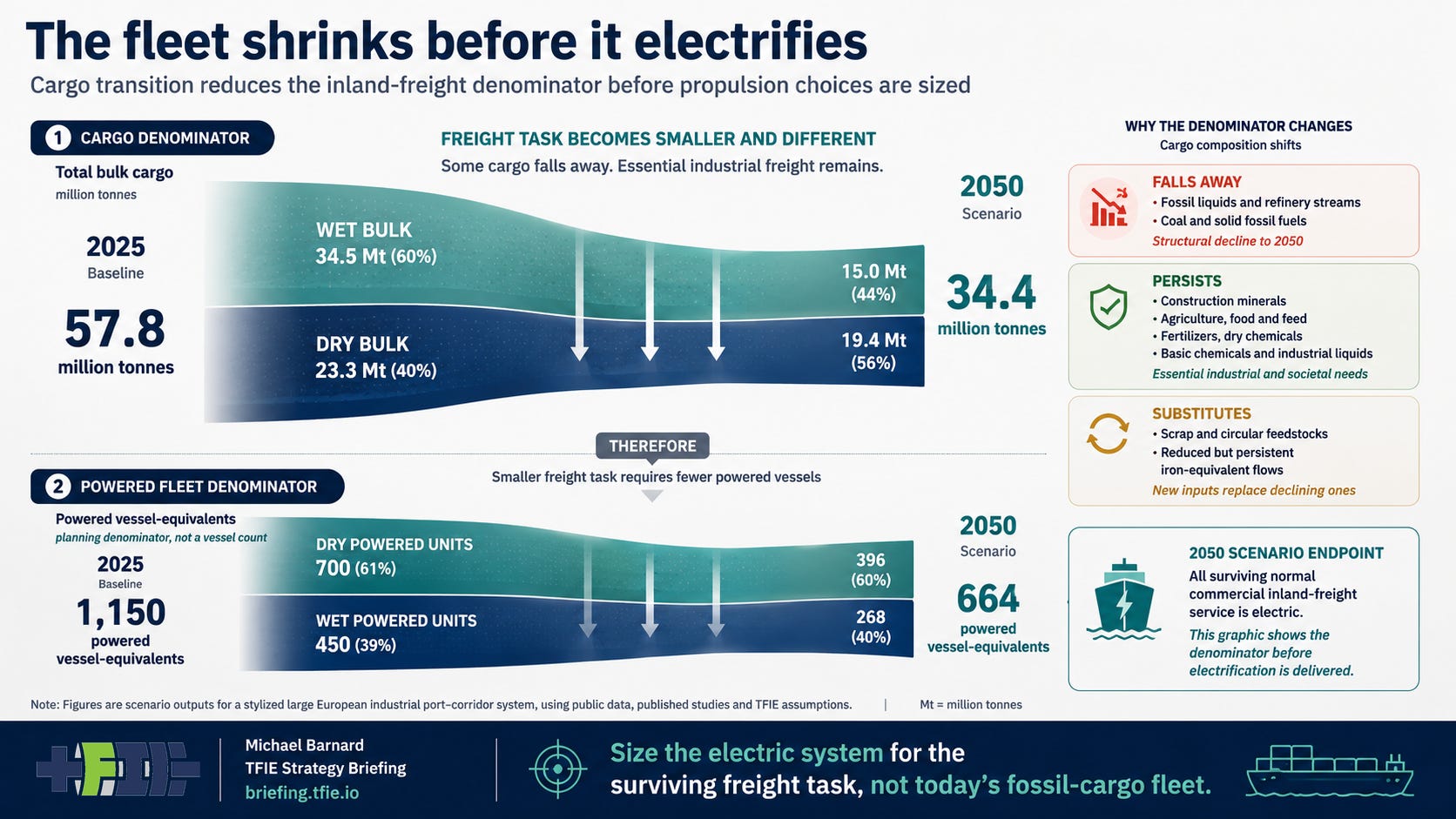
What replaces the coal and oil shipments? Why does the modelled dry-freight requirement fall much faster than dry-bulk tonnage, and how does that translate into real vessels and investment decisions? The rest of the analysis works through the cargo substitutions, fleet calculations and implications for ports and shipowners. Subscribe for free to continue reading.