

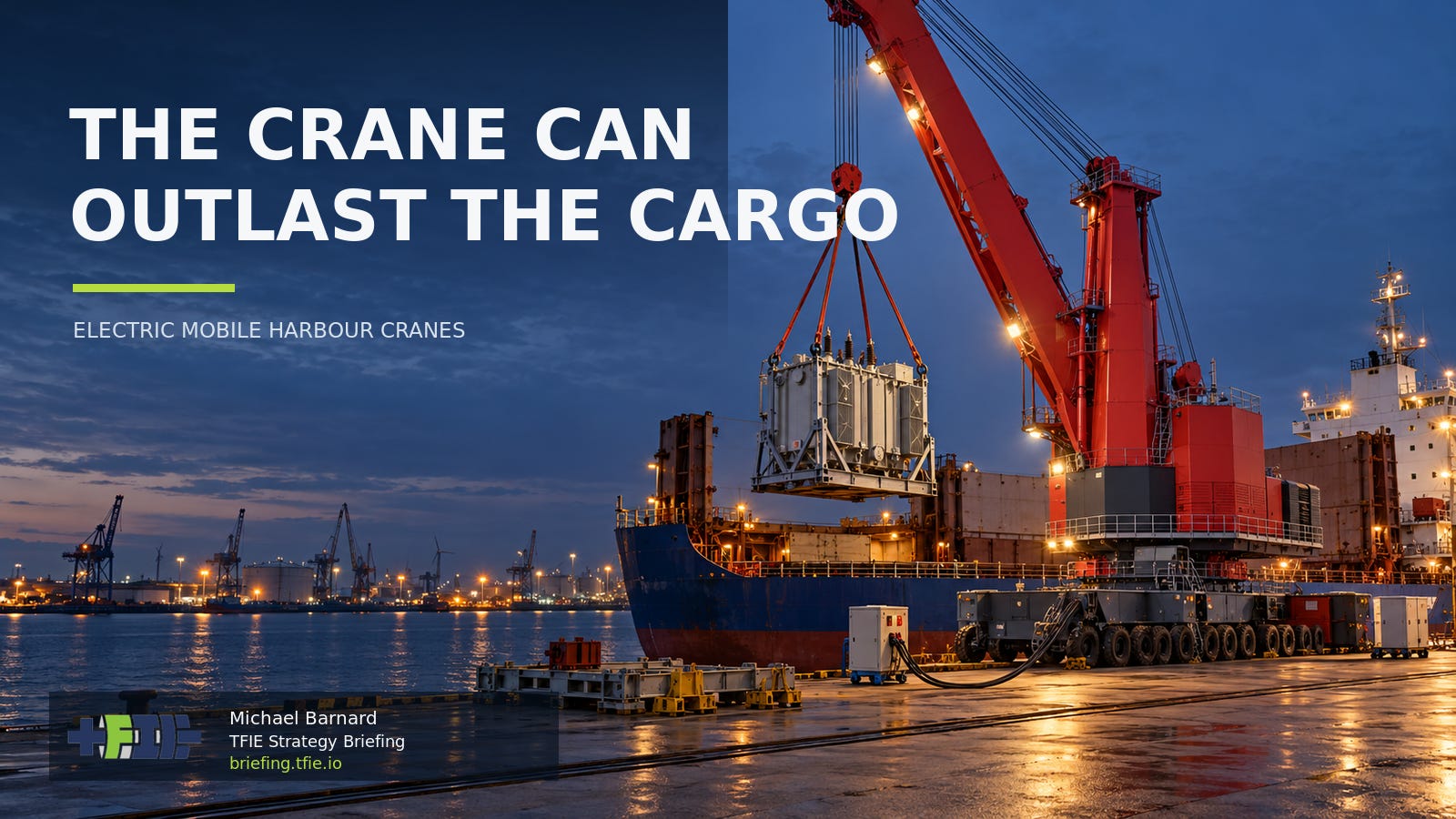
Katoen Natie has put two all-electric mobile harbour cranes into service at its bulk terminal in Antwerp, with four more joining them across three deep-sea multipurpose terminals. The fleet includes four 200-tonne cranes and two 150-tonne cranes; paired machines can lift up to 400 tonnes. Katoen Natie expects the six to avoid as much as 500,000 litres of diesel use each year. The immediate benefits are fewer emissions, less diesel exhaust and lower noise on the quay. The more interesting part is what the cranes say about the changing boundaries of port electrification.
Fixed container cranes came first for good reasons. They stay in one place, follow repetitive work patterns and usually have substantial electrical supply nearby. Mobile harbour cranes work under very different conditions. They run along the quay on rubber tyres, serve irregular vessel calls and handle steel, machinery, transformers, wind components, conventional breakbulk, bulk grabs and containers. For decades, that made an onboard diesel generator seem unavoidable. Katoen Natie’s new cranes use external electricity while working, with rechargeable batteries for movement and operational buffering. Konecranes describes the configuration here.
The arrangement is sensible. Grid power provides the energy for the lifting work; batteries let the cranes move between operating positions; the terminal avoids building a fuel supply chain around a machine that repeatedly returns to places with power. It is familiar logic from road transport, applied to equipment at a much larger scale. These are 150- and 200-tonne machines built for the variable working conditions of a multipurpose port, not a demonstration fleet operating in a carefully controlled niche.
In Ports Have To Spend More On A Shrinking Bulk Base, I argued that ports face rising capital requirements as some of the cargoes that financed their historical infrastructure begin to decline. Coal, crude oil, petroleum products, LNG and LPG account for roughly 40% of maritime freight tonnage today. Raw iron ore adds roughly another 15%, with greater scrap availability, electric-arc steelmaking, lower steel intensity and more processing near mines and cheap clean electricity all affecting its outlook. The channels, berths, rail links and terminals built around those flows remain expensive even as the tonnes fall.
Ports are looking for replacement business, often in containers, green molecules, renewable-energy components and new manufacturing. Individual ports can win those markets, but the sector cannot all gain the same container traffic from neighbouring ports. Nor is there likely to be tonne-for-tonne replacement of coal, oil and gas with imported hydrogen, ammonia, methanol or other green molecules. Electrification reduces the fuel moving through the economy. Port investments need to work across more than one cargo forecast.
An electric mobile harbour crane offers that flexibility. It can serve steel products, industrial machinery, agricultural equipment, construction modules, transformers, cable reels, scrap, project cargo and conventional general cargo, while retaining a role in bulk and container handling. The electrical system supporting it has the same virtue. Grid connections, substations, battery storage and energy-management systems can first serve cranes, then yard equipment, trucks, shore power, harbour craft, tugs and inland vessels. A dedicated coal unloader, LNG jetty or green-molecule terminal carries a much narrower view of future demand.
Breakbulk is not immune to change. It is a handling category, not a common demand driver. Oil-and-gas project modules rely on continued oil-and-gas investment, LNG-project components rely on gas expansion, and some forestry products have shifted into containers. Steel imports rise and fall with construction cycles, tariffs and industrial restructuring. Offshore-wind cargo will matter in some ports, though the North American market has shown how quickly policy, financing and supply-chain pressures can disrupt an apparently strong project pipeline. Grid hardware, cable, transformers, rail equipment, industrial machinery and construction modules have firmer long-term reasons to persist, but their flows will differ sharply by region and port.
Katoen Natie’s purchase is a good example of equipment suited to that uncertainty: heavy, mobile, electrically powered and useful across a changing cargo mix. Ports do not need perfect foresight about the freight that follows fossil bulk. They need assets that lower the cost and carbon intensity of handling the freight that does.
Subscribe to TFIE Strategy Briefing for evidence-based analysis of the changing economics of ports, freight and electrification.