

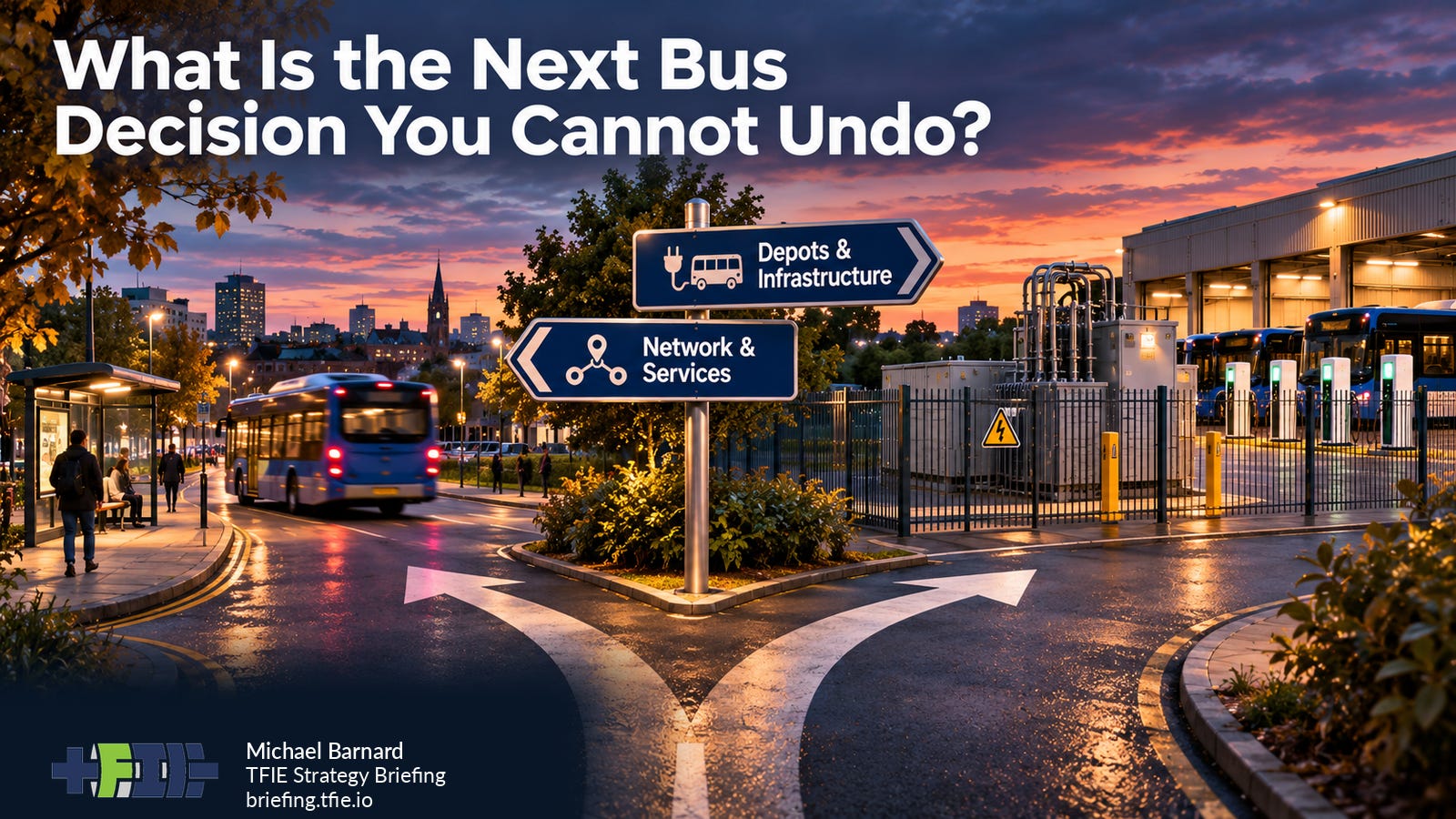
On November 2, 2026, FirstGroup announced a £109 million asset agreement with the West Yorkshire Combined Authority. It covers five freehold bus depots, associated infrastructure and a fleet of 330 buses, including 79 battery-electric vehicles. The depot sales have already completed, while the buses are scheduled to transfer as the new Weaver Network franchises begin operating in May 2027, January 2028 and October 2028. First Bus will continue running existing services from the depots under temporary leases until their respective transfers. The company will also manage the electrification of the Bradford and Huddersfield depots, with the authority funding that work. Several important parts of the future network are now being assembled, each with its own timetable, financial obligations and operational dependencies.
West Yorkshire is also spending £120 million on more than 250 new buses, a separate programme from the £109 million transaction. The Combined Authority has already awarded operating contracts, and further procurement and infrastructure work will continue as franchising spreads across the region. Under the first large contracts, the authority will specify service levels and retain passenger-revenue risk, while private operators deliver the services. Electric buses will be owned by the authority and made available to the operators, while some diesel vehicles will remain with FirstGroup during the initial contract period. These are interconnected decisions about passenger service, capital investment, operational responsibility and future flexibility. They also illustrate a problem that every metropolitan transport authority faces: the consequences of today’s agreements can extend well beyond the period for which their original business cases were prepared.
Bus networks operate on several different clocks. A timetable can change within months, although major service revisions require consultation, planning and operational preparation. An operating contract may last five or seven years. Buses can work through several contracts, with their economic lives affected by utilization, maintenance and technology. Depot buildings, charging installations and grid connections may remain useful for decades. Land can remain strategically valuable for much longer. An authority can decide to change routes or operating companies, but it cannot relocate a secured multi-megawatt electricity connection or find a replacement depot in the same way. The choices are not necessarily permanent, but changing them can require substantial compensation, new capital expenditure, additional vehicles, years of engineering work or interruptions to passenger services.
That makes the most important question at the next transport authority board meeting broader than whether the proposed investment has a positive business case. What service is the authority committing to provide, what must be true for that service to work, and what will it cost to change course if those assumptions prove wrong? A depot purchase might secure a scarce and valuable operating site, or it might commit the network to a location that becomes increasingly inconvenient as routes evolve. A long-term charging agreement could reduce financing costs while constraining future equipment choices. A competitively priced operating contract might allocate demand or infrastructure risks to a company unable to manage them effectively. The point of examining those possibilities is to identify which uncertainties matter before a binding commitment is made.
The starting point is the passenger network the authority intends to provide. Coverage, operating hours, frequency, connections, affordability, accessibility and reliability determine what transport service residents actually receive. Fleet size, depot location and charging capacity are consequences of that service proposition as well as constraints upon it. If a city expects employment and housing growth on its outskirts, an existing depot might be poorly located for the longer routes and additional buses that growth will require. Securing the land because it is available today may be commercially attractive, but its value to the future network depends on the service that will be operated from it. The same reasoning applies to a decision to withdraw lightly used services. Operating costs may fall, yet the remaining network could lose connections that make other routes useful. The passenger outcome and the financial outcome belong in the same decision.
West Yorkshire’s arrangements show why ownership and financing have to be considered alongside those passenger objectives. The authority is securing depots and electric vehicles while contracting private companies to operate services. FirstGroup can continue providing its operational expertise and is being engaged to deliver electrification work, even as the authority takes control of assets previously held on the operator’s balance sheet. The arrangements also provide for an agreed residual-value treatment when certain diesel vehicles pass to a successor operator. The authority is choosing which assets and risks remain within the metropolitan system and which functions operators will provide under contract. The future value of that architecture will depend on effective service planning, asset management, financing and the ability to adapt as the network develops.
An authority making these commitments needs different evidence at different stages. Before buying a strategically important depot, it should understand the service case, site condition, alternative locations, available electrical capacity and credible future uses. Before awarding an operating contract, it needs a deliverable service specification, sufficient market interest, workable workforce and data arrangements, and a financial model that reflects the risks assigned to each party. Before committing to major electrical infrastructure, it needs an appropriately assured connection pathway, realistic charging requirements and arrangements for access and future expansion. Before launching service, those plans must become working vehicles, trained staff, usable charging capacity, ticketing, passenger information and contingency arrangements. The evidence required for a capital commitment is different from the operational proof that can only be obtained during commissioning.
The challenge is keeping those decisions connected without making every part of a programme wait for every other part. A city can continue network planning while a depot connection is being assessed. It can negotiate access rights, commission site surveys, develop route alternatives and undertake market engagement before selecting a final infrastructure arrangement. Some work is valuable precisely because it preserves alternatives. Securing an option on suitable land, for example, can provide time to test its location and power requirements before committing to a purchase. The important distinction is between expenditure that improves the information available and expenditure that effectively decides the outcome. Preparation can become a commitment by degrees if contracts, deposits, equipment orders and preliminary works accumulate until abandoning the original plan becomes politically or financially difficult.
A delay should consequently be treated according to the decision it affects. If the grid connection required for a depot remains uncertain, it may be sensible to continue engineering, service modelling and discussions with the distribution network operator while holding back an investment dependent on that connection. The same uncertainty need not prevent a separate fare integration project or a service improvement that uses the existing fleet. Conversely, a decision to purchase buses may be justified before every charger is installed, provided the delivery schedules, connection pathway, financing exposure and fallback arrangements have been established. Ireland’s experience with purchased electric buses awaiting charging infrastructure illustrates how fleet manufacturing and infrastructure delivery have to be coordinated across different lead times. Neither delaying all vehicle orders nor committing without sufficient infrastructure assurance is a credible general rule.
The ability to make these distinctions depends on knowing who can decide, who bears the financial exposure and who must act when an assumption changes. Operators should remain responsible for the delivery functions they can manage well, including staffing, dispatch, maintenance and charging schedules. Distribution network operators must assess and deliver the electrical work under their own technical and regulatory responsibilities. Infrastructure providers and financiers need credible arrangements for asset utilization, repayment and remaining value. The metropolitan transport authority needs enough information to understand how those arrangements combine into the service residents will receive. Assigning an investment risk to an operator does not make the risk disappear from the system if its consequences eventually prevent the service from operating or make the next procurement unaffordable.
This is particularly important because road conditions and the passenger network continue changing after the original investment is made. A bus-priority programme may reduce journey times and allow the same frequency to be delivered with fewer buses. New housing can shift demand toward different corridors. A hospital relocation or major employment development can change the usefulness of an existing interchange. A new connection between two routes can create passenger value without requiring a large fleet expansion. Authorities need to retain the ability to make those improvements while recognizing that some depot, charging and contract commitments may constrain their choices. A well-designed initial agreement preserves room for the next worthwhile service change rather than treating the original route structure as permanent.
The Department for Transport’s January 2026 franchising guidance already requires English authorities to consider many of these issues. Depot availability, charging infrastructure, workforce arrangements, market competition, passenger outcomes, contract transfers and financial risks are part of the assessment and implementation process. The difficult work lies in maintaining the relationships between those decisions as programmes progress. A sound fleet business case cannot establish that a depot has the required power, and a signed operating contract cannot establish that passenger services are ready to launch. Each approval must rest on evidence appropriate to the commitment being made, while the authority retains responsibility for the combined result.
Glasgow, where this series began, is approaching these choices from another institutional position. Strathclyde Partnership for Transport is developing a statutory franchising assessment under Scotland’s transport legislation. Commercial operators continue providing services and investing in electric fleets and depots while the assessment proceeds. SPT can examine how alternative network arrangements might affect passengers, operating responsibilities, public funding and the infrastructure already in place. Existing investments at First Glasgow’s Caledonia depot and McGill’s depots are part of the region’s current operating capability. Their future usefulness depends on the network arrangements eventually selected and the commercial terms under which those assets remain available. The assessment provides an opportunity to evaluate those relationships before major new commitments narrow the choices.
The eventual governance decision will matter, but so will the capability to operate whatever arrangement emerges. A transport authority needs people who understand network planning, passenger information, procurement, finance, fleet requirements, depot capacity, operating performance and the implications of decisions made by road and electricity utilities. It also needs reliable data that remain available when operators change. Those capabilities cannot exist only within the temporary team responsible for launching franchising or procuring an electric fleet. A metropolitan network must be managed continuously, with service changes, contract renewals and infrastructure investments evaluated against the same passenger objectives. Institutional continuity is itself part of what allows the city to change direction without repeatedly reconstructing its knowledge and systems.
Across the five articles in this series, the central finding has been that optimizing individual buses, routes, operators and depots does not necessarily produce the best metropolitan passenger network. Britain and Ireland’s different operating arrangements have shown the value of commercial efficiency, the importance of coordinated passenger services and the new physical constraints created by electrification. They have also shown why no single ownership or contracting model settles every question. The next test is whether those institutions can make investments and service changes that remain useful as demand, technology and operating arrangements evolve. A city that gets its first contract or fleet order right has made progress. A city that can keep improving its network through successive contracts, investments and service changes has built something more durable.
Every metropolitan authority has another decision approaching. It may be a fleet replacement, a contract renewal, a depot purchase, a grid connection, a fare change or a network redesign. Before approving it, the board should understand what passenger service the decision secures, which options become expensive to recover, and who will be accountable if the assumptions change. Good transport governance is demonstrated through those decisions over time. The best bus investment is one that delivers the service needed today while preserving the ability to build a better network tomorrow.
The full TFIE Strategy report, The Bus Is Not the System — Metropolitan Transit Governance, examines the evidence from forty years of British and Irish bus governance and provides a framework for evaluating network, fleet, depot, grid and contracting choices. TFIE Strategy works with transport authorities, operators and investors on decade-by-decade fleet, infrastructure and service assessments through 2050, connecting near-term commitments to longer-term transport and decarbonization pathways. Contact Michael Barnard to discuss a strategic assessment or request the report’s supporting Evidence Book.
Fifth and final article in The Bus Is Not the System series.