

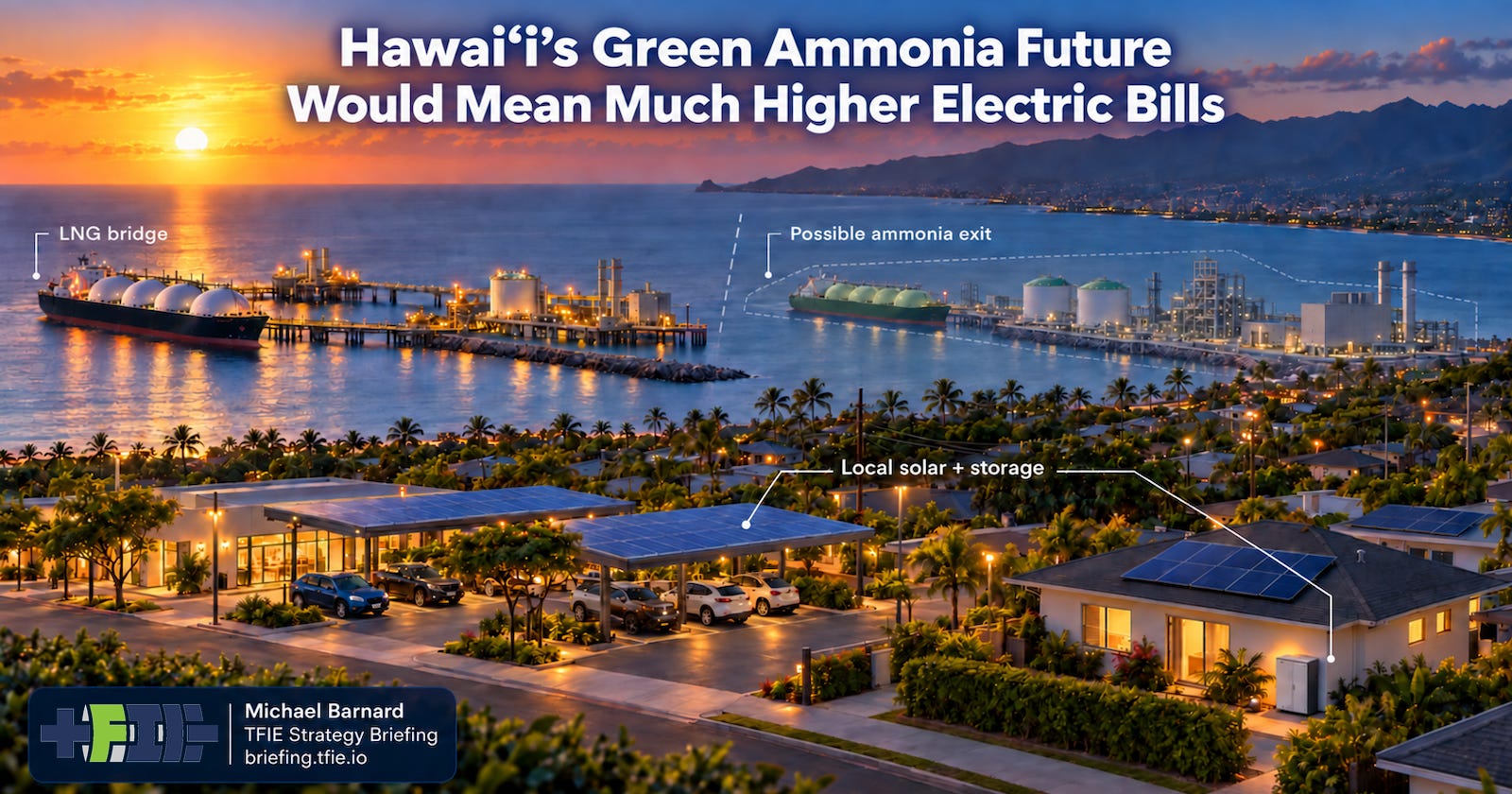
The argument for bringing liquefied natural gas to Oʻahu is that it would replace oil for a while, lower bills, and give the island time to reach a renewable electricity system. The last step matters. Hawaiʻi law requires electric utilities to reach 100% renewable electricity generation by 2045. LNG cannot be the fuel at the end of that bridge.
The Hawaiʻi State Energy Office’s fuel study presents LNG as a possible near-term bridge. It points to imported green ammonia and hydrogen among the technologies that might eventually replace fossil gas, alongside local biodiesel production. The law requires renewable electricity; it does not require ammonia. Yet if a new gas plant and import system depend on a later switch to green ammonia, the price of that switch belongs in the decision made today. JERA’s proposed Oʻahu LNG plant remains subject to regulatory approval, and no green ammonia supply contract or conversion project has been approved.
That far shore looks costly. The source and calculation transparent Hawaiʻi electricity cost spreadsheet I developed estimates about 21 cents per kilowatt-hour leaving a new LNG plant, assuming high utilization. Its green ammonia case costs about 95 cents on the same power-plant basis. Renewable electricity must first be used to make hydrogen abroad; the hydrogen is turned into ammonia for shipping, then delivered to Oʻahu, turned back into hydrogen, and used to generate electricity. Each conversion consumes energy and adds equipment and operating costs. The figures are modeled scenarios, not bids or future retail rates, but the gap is too large to dismiss as a small detail of a fuel transition.
The idea that green ammonia would replace LNG as a shippable fuel depended on green hydrogen being cheap. That was never going to happen, the projects that reached final investment decision in the past three years have made that clear, and now realistic projections for 2040 and 2050 are still above $5 per kg, nowhere near the $1 per kg that so many hydrogen spreadsheets were using a few years ago.
Households can see what that risk means. For an Oʻahu detached home using 700 kilowatt-hours a month, the workup estimates that a 6-kilowatt rooftop solar system, a 10-kilowatt-hour battery, and daytime water-heating control would cover about three quarters of annual use. The modeled installation costs about $29,000, or $24,000 if the household qualifies for the assumed $5,000 state tax credit. At the September 2026 rates used in the model, its utility bill falls from about $322 to $63 a month. Including the annualized equipment cost, upkeep, and remaining grid purchases, its total electricity cost is about $241 a month. The simple cash payback is 8.4 years. Roof conditions, financing, actual usage, and tax-credit eligibility will change the result.
Now suppose the modeled ammonia generation replaced the same amount of oil generation and its entire additional cost flowed through Oʻahu electricity sales. The example home’s grid-only bill would rise to about $627 a month. Under that scenario, the solar and battery system’s simple payback falls to about 4.4 years. It makes the exposure clear: a family that can produce and shift much of its own electricity has substantial protection against an expensive imported-fuel pivot. A family that rents or cannot afford the installation deserves access to shared solar, storage, and bill savings rather than being left to bear that risk alone.
And note the “high utilization” caveat related to LNG and green ammonia electricity prices. The more families and businesses that put solar and batteries on their properties and the more that timeshift water heating and EV charging to the daytime, the lower the utilization of the generation plants. Their high capital costs get spread over a lot fewer kWh and so the cost per kWh has to rise. This might be fine if an alternative didn’t exist. But it does.
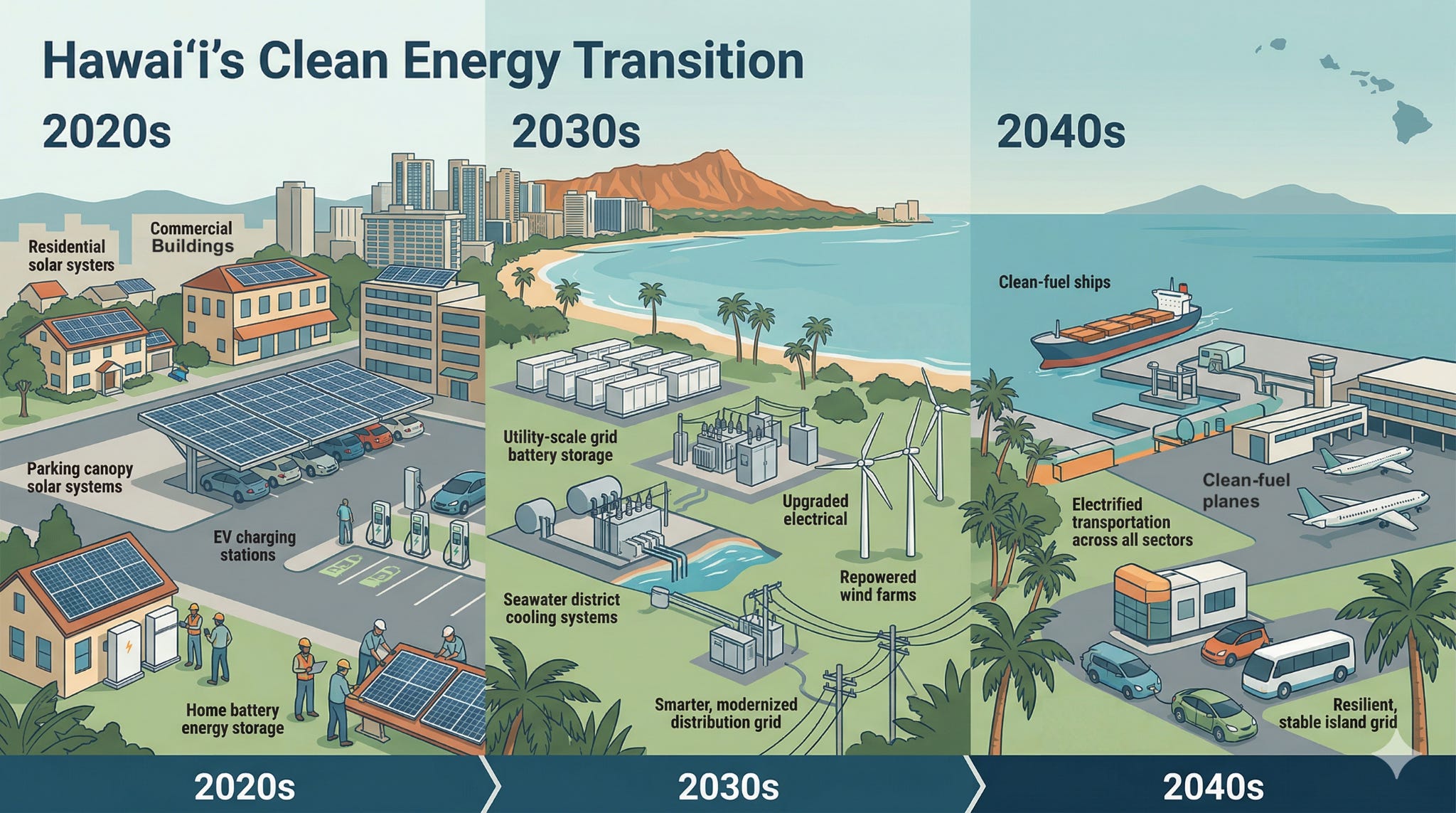
In the TFIE Strategy Briefing whitepaper The Clean Energy Future Hawaiʻi Can Actually Build, I set out a pathway built around rooftop and parking-canopy solar, batteries, managed vehicle charging, daytime water heating, efficient cooling, suitable wind, grid upgrades, and a limited locally sourced biomethane reserve for difficult periods. Commercial roofs and parking areas can produce electricity near businesses; flexible cooling and charging can use more of it when the sun shines. Industry can electrify suitable equipment and avoid paying to turn renewable electricity into imported fuel and back again. Those applications require their own site-level economics and grid planning, but they deserve to be compared with the full LNG-to-ammonia sequence, not merely with today’s oil bill.
The State Energy Office acknowledges that local renewables remain important, but its alternative-fuels study did not examine their buildout in comparable detail. Before committing Hawaiʻi to an LNG bridge, the state should cost the proposed exit from it and the local route alongside it. For households able to install solar and batteries now, the model already shows a payback at current prices. An ammonia-powered future would make waiting much more expensive.
Subscribe to TFIE Strategy Briefing for costed alternatives to Hawaiʻi’s imported-fuel future.