

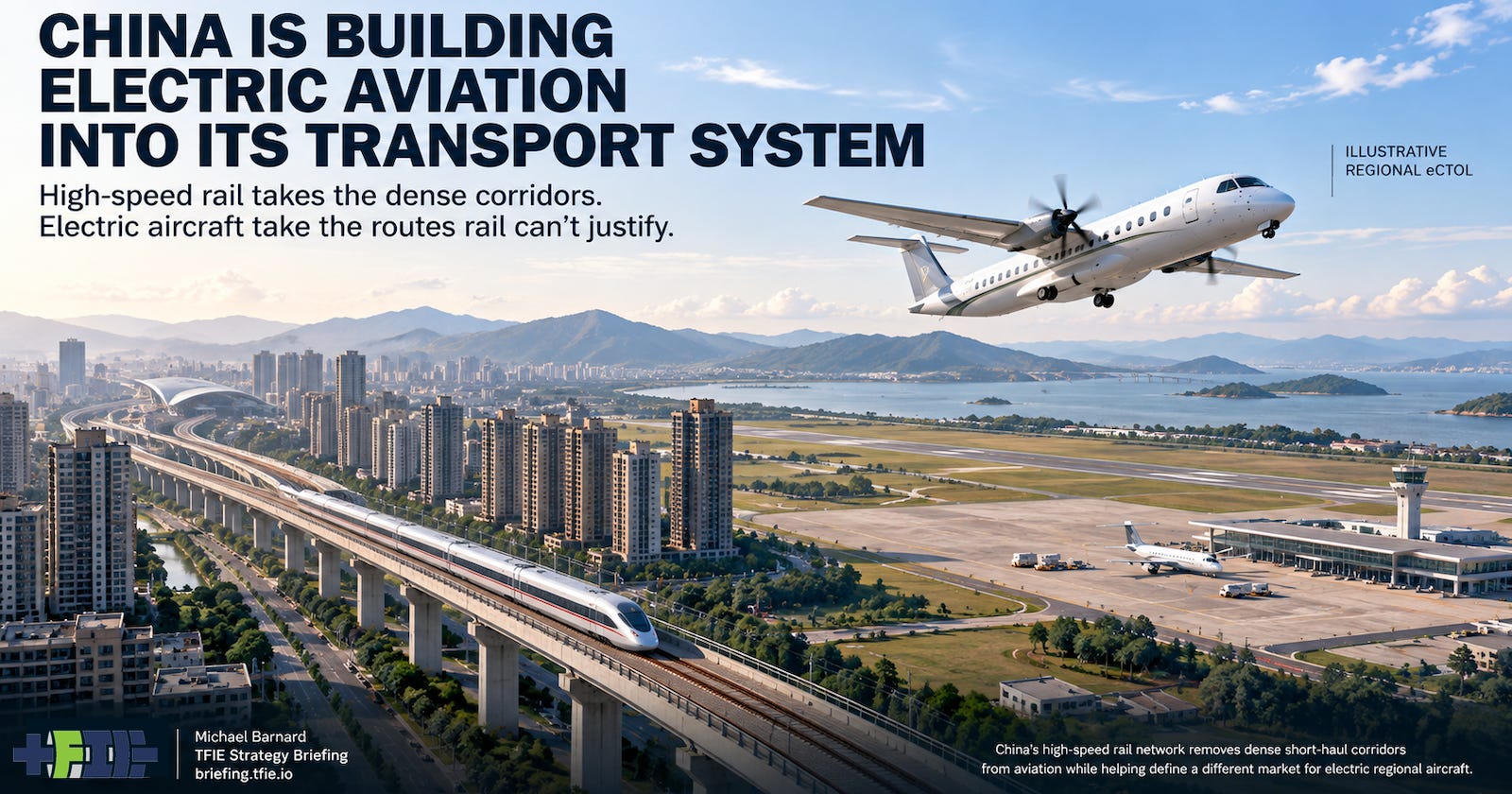
China is building the strongest competitor to short-haul aviation on the planet while developing the aircraft industry it still needs. By the end of 2025, its high-speed rail network exceeded 50,000 kilometres and continues to expand toward roughly 60,000 kilometres by 2030. Those lines remove passengers from some potential airline routes, but that is only a problem if the objective is maximizing aircraft sales. China’s objective is moving people, strengthening domestic industry and reducing strategic dependence.
Seen from an aircraft manufacturer’s sales department, every new high-speed rail line is competition. Seen from a transport ministry, rail and aviation have different jobs. Dense city pairs can justify expensive fixed railway infrastructure and very high frequencies, while long distances still favour aircraft. Between them sit regional cities, islands, difficult surface connections and thinner passenger flows where neither another high-speed rail branch nor a Boeing- or Airbus-sized jet is a particularly good answer.
China is most likely to build electric aviation into a substantial industry before comparable deployment becomes widespread in the United States and Europe. By electric aviation at scale, I mean hundreds of runway-based electric and hybrid aircraft in repeated passenger and cargo operations, followed by repeat purchases from operators that have seen the maintenance, battery and utilization numbers, and meaningful exports beyond China. A large trainer fleet, an order book or a collection of demonstrators would not meet that test.
The first meaningful lead should appear in smaller battery-electric aircraft, roughly in the two- to 19-seat range, where batteries can replace combustion propulsion most directly. The harder second test is hybrid-electric regional aircraft in the 30- to 100-seat range, where combustion systems remain part of the architecture and the integration problem becomes significantly more difficult. China does not have to solve the second before it has built a substantial electric-aviation industry, but its battery, propulsion and aerospace programs put it in the strongest position to attack both.
The relevant category here is battery-electric and combustion-hybrid-electric conventional takeoff and landing aircraft. Urban flying taxis are a distraction from this market, although batteries, motors, flight controls, manufacturing skills and certification experience developed around them can migrate into actually useful aircraft. Hydrogen remains a poor aviation energy carrier, and long-haul jets will continue to depend on liquid fuels. Electric aviation matters because it can progressively take over regional missions where the physics and economics favour it.
I laid out the transport logic in China Moves People First, Then Decides Whose Planes It Needs. China’s aviation market makes more sense after rail has taken the dense corridors rail serves well. What remains includes longer routes, western and less rail-served regions, international traffic, cargo and short regional journeys where geography or passenger density makes another railway unattractive. Those inconvenient regional routes are exactly where electric and hybrid aircraft can become increasingly competitive.
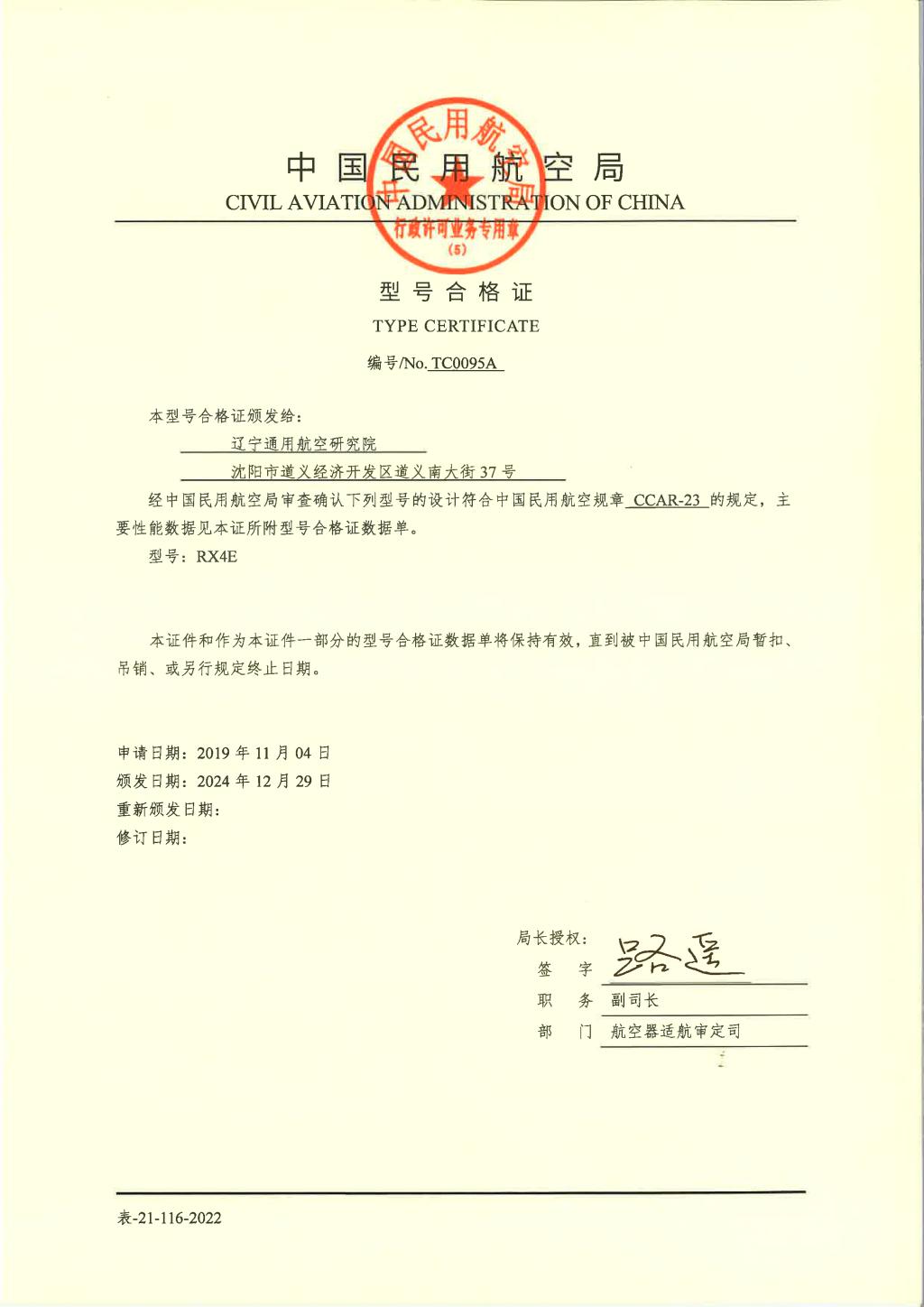
China already has a small but real electric-aircraft base. The four-seat RX4E received its CCAR-23 type certificate in December 2024, while the smaller RX1E family has also been certificated and delivered to customers. Beijing subsequently reported the first RX4E from its new assembly operation rolling out in September 2025 ahead of batch production. Those aircraft do not establish the regional transport market I am describing, and several organizations associated with the RX family belong to the same development and commercialization chain rather than representing independent competing manufacturers. They do establish that China has crossed from electric-aircraft demonstration into certification, production and customer delivery.
Europe has important achievements too. EASA certified the two-seater Pipistrel Velis Electro trainer in 2020, and Pipistrel announced the 100th aircraft entering service in 2024. Western aerospace firms have strong propulsion programs, certification experience and long-standing operator relationships. China’s likely advantage is not that everyone else has missed electric flight; it is that China is better positioned to connect batteries, aircraft, policy, infrastructure, operators and procurement into a sustained deployment program.
The strongest existing industrial advantage is batteries. China accounted for more than 80% of global battery-cell production in 2025, along with even larger shares of several important active-material supply chains. Aviation batteries have tougher mass, power, safety and life requirements than automotive products, but the underlying manufacturing capability does not stop at the airport fence. Materials processing, cell production, manufacturing equipment, quality control, thermal systems, motors, inverters and power electronics already exist at scales aviation could never create for itself.
China’s battery advantage is no longer an automotive story being projected onto aviation. CATL, Zenergy and Chinese aircraft developers are already doing aviation-specific engineering, conformity work and flight testing. The unanswered question is how quickly that capability produces battery systems with the installed energy density, power, life and cost required for commercially attractive aircraft. Taken together with China’s transport strategy, aerospace policy and growing domestic aviation capability, those strengths create the clearest route to large-scale electric-aircraft production and use now visible.
The important contest is therefore not the next prototype flight. It is which country gets hundreds of useful aircraft into repeated service, learns from them, improves the next generation and sells the resulting system abroad.
The aircraft themselves are only the most visible part of the contest. The more consequential evidence sits underneath them: CATL’s aviation battery work, COMAC’s electric-propulsion programs, AECC’s regional hybrid systems, CAAC’s expanding institutional experience and a transport policy that already assigns rail and aviation different jobs. Put those pieces together and the likely path to the first large electric-aviation industry looks quite different from the usual startup-by-startup view.