


The COP31 proposal for electricity to supply 35% of global final energy demand by 2035 exposed a gap in my mental model. My recent RenewEconomy article got the target right in one sentence and wrong a few paragraphs later. The target was final energy. The analysis then treated it as if it were close enough to useful energy to apply the primary-energy correction I have used for years. That was wrong.
The bias is easy enough to see after the fact. Much of my energy writing has been built around the primary energy fallacy, the idea that a decarbonized economy has to replace all fossil primary energy one-for-one. It does not, because a great deal of fossil primary energy is waste heat, upstream loss and conversion loss. The economy wants useful services: heat, light, motion, shaft work, computation, comfort, logistics and industrial output. After years of working with that primary-to-useful distinction, the phrase final energy slid through my filter too easily. Final sounded like the end of the chain. It is not. It is the point where energy reaches the user, before the user’s equipment turns it into useful work or wastes it.
Final energy is legacy cruft from energy-balance accounting. That does not make it useless. It is official, measurable and convenient for energy ministries, statistical agencies and international bodies. But it is not what the economy gets. It is what crosses the customer boundary. A litre of diesel reaches the truck as final energy before most of it becomes heat. A kilowatt-hour reaches an electric motor before much more of it becomes useful motion. A unit of electricity reaches a heat pump before the heat pump gathers additional ambient heat. Final energy is a delivery ledger, not a useful-work ledger.
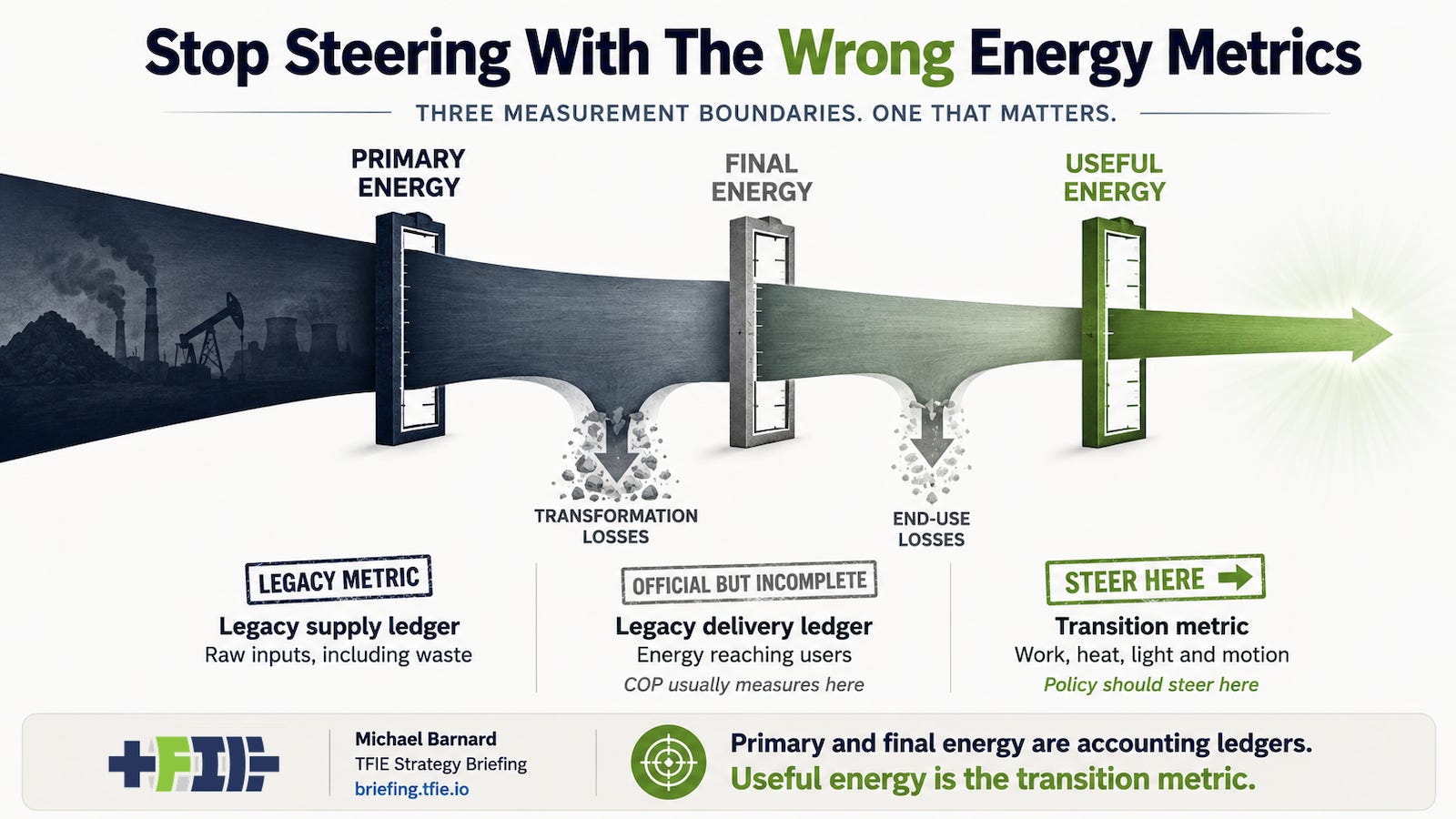
Primary energy, final energy and useful energy are three different measurement boundaries. Primary energy is raw energy entering the system. Final energy is energy delivered to users. Useful energy is the portion that actually performs work, heat, light or motion after end-use conversion. Primary energy is the legacy supply ledger. Final energy is the legacy delivery ledger. Useful energy is the transition metric.
The RenewEconomy error was importing the right correction into the wrong denominator. The COP31 proposal was not saying electricity should be 35% of primary energy by 2035. It was not saying electricity should provide 35% of useful energy services. It was saying electricity should reach 35% of final energy demand. The article should have held that boundary instead of reaching for the primary-to-useful shortcut.
Primary energy remains a poor guide to the transition. It is useful for supply accounting, commodity flows and historical energy balances, but it gives fossil fuels a legacy advantage by counting waste before useful service appears. Coal is counted before power-plant conversion losses. Oil is counted before engines turn much of it into heat. Gas is counted before boiler, furnace or turbine losses. Primary energy is a valid accounting category, but it is a bad steering wheel.
Final energy is less distorted than primary energy, but it still stops too early. It tells us what fuel, electricity or heat reaches users. That makes it visible to meters, invoices, tax systems, distributors, customs records and national statistics. It also explains why COP uses it. International climate diplomacy needs numbers that governments can report, compare and negotiate. Final energy already sits in the administrative machine. Useful energy largely does not.
The boundary problem matters because electrification changes the relationship between delivered energy and useful output. Electric drivetrains move vehicles with far less final energy than internal combustion engines. Heat pumps deliver multiple units of heat from one unit of purchased electricity. Motors, induction, arc furnaces and other electric processes change the ratio between energy crossing the customer boundary and useful work. As these technologies spread, final energy can fall while useful service rises. That is the point of electrification, not a statistical inconvenience.
Michael Liebreich has already called this out directly, and I’m grateful for him pointing out my final/useful confusion recently. His response to the COP31 electrification target, “Let’s target 35% electrification, but of what?”, was that the co-presidents had chosen the right subject, electrification, but the wrong headline metric if electricity’s share of final energy becomes the main measure of progress. His preferred alternatives are sectoral electrification or electrification as a share of useful energy. He also made the institutional demand plainly: IEA member countries should require the IEA to publish a definitive useful-energy dataset every year as part of the World Energy Outlook.
That demand is the right one. Useful energy has not been missing because nobody understands it. IIASA built a Primary, Final and Useful Energy Database, although it appears to stop at 2014. Paul Brockway and colleagues at Leeds produced a country-level primary-final-useful energy and exergy database through 2020. The IEA already maintains Energy End-uses and Efficiency Indicators across the major sectors. The missing layer is not thermodynamic genius. It is institutional ownership.
Useful energy would not be perfect. Nothing in energy statistics is perfect. Primary-energy accounting is already full of conventions. Final-energy balances depend on reporting systems, allocations and category choices. A useful-energy layer would require transparent assumptions about engines, boilers, motors, heat pumps, lighting, industrial process heat, appliances and equipment stock. It would need country adjustments and confidence ranges. That is normal statistical work. It is also the work required if governments want a metric that describes what the economy actually receives.
Jan Rosenow is right on the complementary point. His work on electrification as electro-efficiency is exactly the frame needed for public policy. Electrification is not simply fuel switching. It reduces the amount of delivered energy needed for the same service in many major end uses. Rosenow is also right that electricity’s share of final energy is an important official signal. If electricity is not rising in final energy, then transport, buildings and industry are not moving fast enough. But scoreboards become targets, and targets become steering metrics. Final energy should be treated as an interim scoreboard, not as the measure of how much of the economy has actually electrified.
The difference matters because final-energy targets can be misread. Coal-fired electrification can increase electricity’s share of final energy without delivering the emissions result required. Resistance heating can raise electric final energy where heat pumps would have delivered much more useful heat per unit of electricity. EVs and heat pumps can make a country look less electrified than it is in service terms because they shrink the final-energy denominator as they replace combustion. A final-energy target without a useful-energy companion leaves too much room for lazy interpretation.
The COP31 35-by-35 target still has value. It puts electrification beside renewable generation, grids, storage and efficiency. It pushes the conversation beyond power supply and into vehicles, buildings and industry, where fossil fuels remain embedded. It is a better signal than a renewables target alone. But it needs a warning label. Thirty-five percent final energy is not thirty-five percent useful energy. It is not a direct measure of service electrification. It is a delivery-boundary statistic.
The institutional fix is mostly will, not physics. COP31 can keep the 35-by-35 final-energy target as an interim administrative measure, but it should require a useful-energy companion table. The IEA and IRENA should publish annual useful-energy estimates by country, sector and end use, derived from final-energy balances and end-use indicators, with transparent assumptions and confidence ranges. From COP32 onward, every major final-energy electrification claim should carry a useful-energy translation.
The disputes would move from bad denominators to visible assumptions. Analysts would disagree over heat-pump coefficients of performance, vehicle efficiency, industrial heat assumptions, appliance stock and regional equipment performance. Good. Those disagreements are better than pretending a legacy delivery ledger tells us how much of the economy has actually transitioned. Useful-service assumptions should be debated in the open rather than hidden behind final energy’s administrative convenience.
The larger lesson is denominator discipline. My priors were useful enough to create a blind spot. The primary energy fallacy is real. Useful energy is the meaningful destination. Those beliefs made final energy feel less dangerous than it is. It sat between the two concepts I was already using, sounded closer to the endpoint than to the supply ledger, and let an existing frame fill in what the term did not actually mean. Cognitive bias often works that way in analysis. It does not require believing the opposite of the evidence. It only requires treating an adjacent category as if it belongs inside a familiar frame.
Briefing will use a stricter rule going forward. Primary energy is for exposing fossil-era waste and supply-side accounting. Final energy is for reading official targets and energy balances. Useful energy is for judging how much of the economy has actually moved to efficient service. Official COP, IEA, IRENA and national targets will be described in their own denominator. When only a proxy is available, it will be called a proxy.
Final energy is official. Useful energy is meaningful. The transition needs both in the data, but only one tells us what the economy actually gets.
Free posts carry the public argument. Paid subscribers get the professional layer behind it: denominator checks, pathway reviews, scorecards, evidence notes, update triggers and decision-grade context for people working around the transition.
If your work depends on knowing whether a target, forecast, technology pathway or investment thesis is using the right metric, subscribe to TFIE Strategy Briefing. The transition is hard enough without steering by the wrong denominator.