

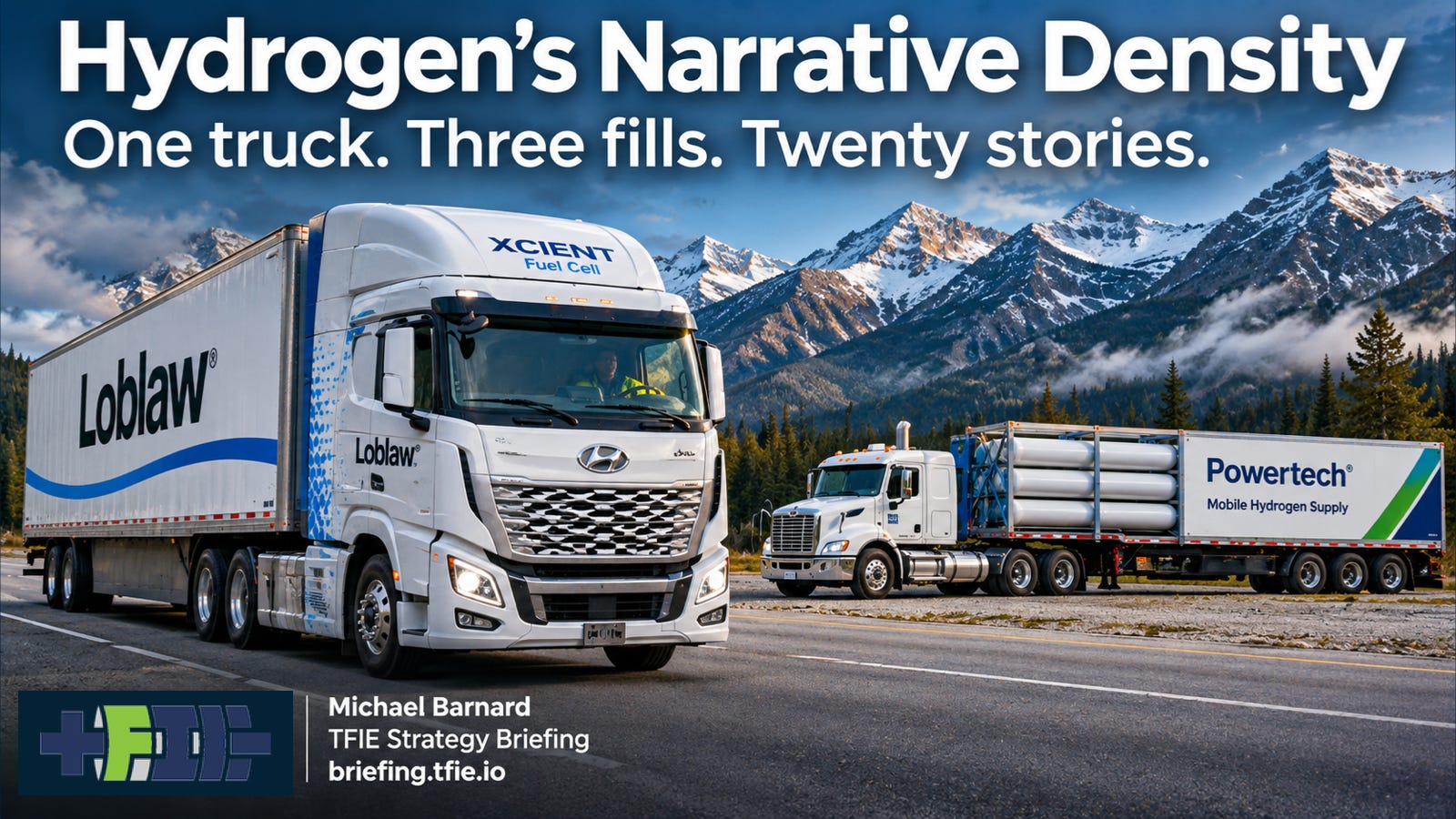
On November 18, a Hyundai XCIENT hydrogen fuel-cell truck operated by Canadian grocery giant Loblaw completed a 1,046 km journey from Vancouver to Calgary. The Edmonton Region Hydrogen Hub announced that it was Canada’s longest commercial freight journey by a zero-emission Class 8 truck. The cumulative elevation gain was almost equivalent to the height of Mount Everest. Congratulations flowed across LinkedIn, and the story appeared in trucking, energy and hydrogen publications internationally.
What was less apparent from much of the publicity was that a separate truck transported the hydrogen needed to complete the journey. The hydrogen truck was fuelled three times, with driving legs averaging 349 km. Three years earlier, a battery-electric heavy truck had completed a comparable mountain-crossing demonstration in Europe with one fewer intermediate energy stop.
How much of the coverage mentioned the refuelling arrangements? Where was hydrogen’s purported range advantage? And what does Loblaw’s existing electric truck fleet tell us about the difference between hydrogen’s narrative density and electrification’s deployment density? Subscribe for free to read the assessment.