

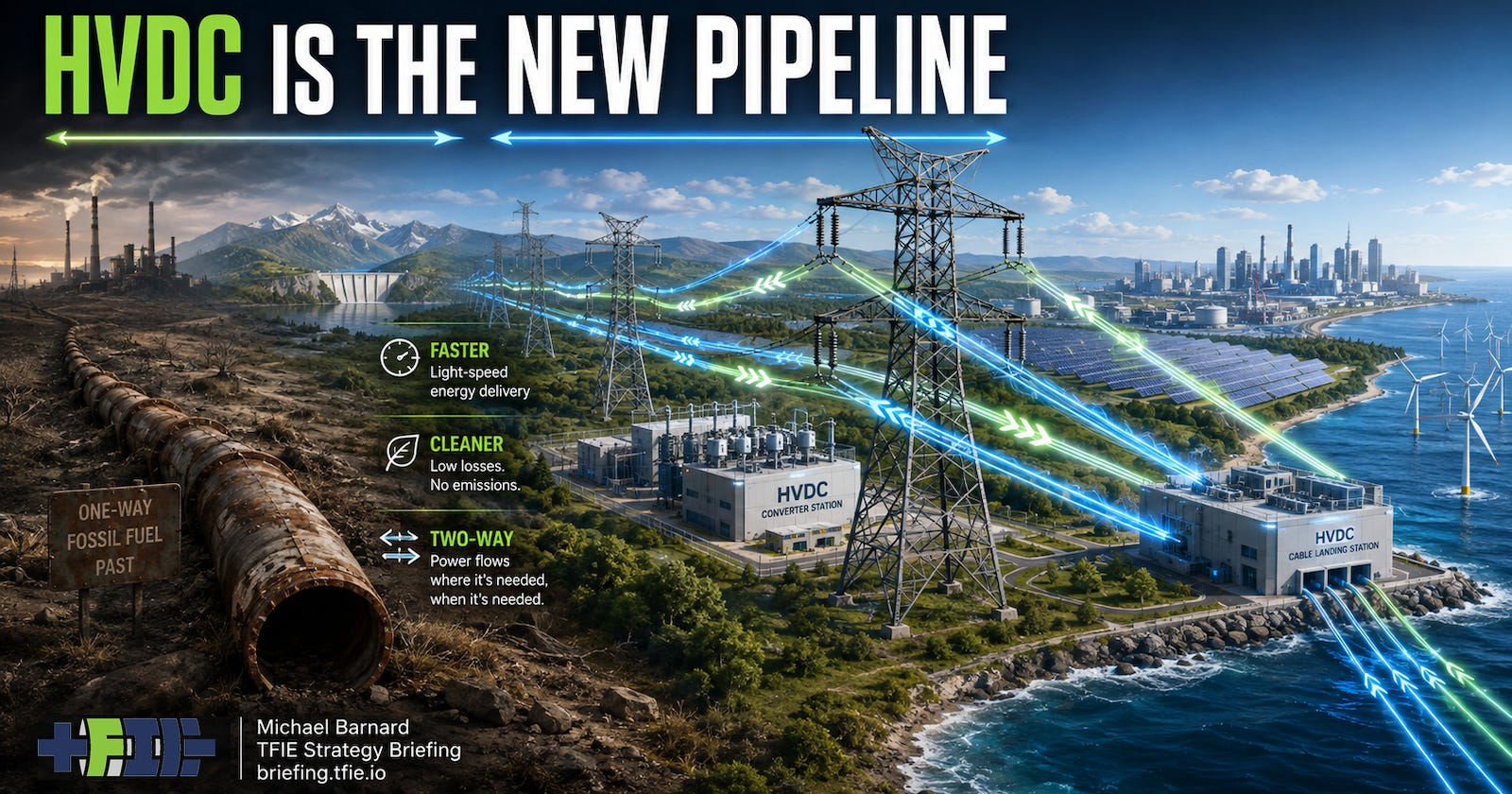
For decades, the world has been moving massive amounts of energy around using steel tubes running along the ground, under the ground and under water. The US alone has about 5 million kilometers of pipelines, with about four years’ worth of the country’s total steel consumption embodied in them.
Now the owners and operators of those pipelines want to have them become something other than stranded assets that will be yanked out of the ground and scrapped for economy-of-the-future purposes such as wind turbine masts. They make all sorts of claims related to this that don’t stand up to much scrutiny. If pipelines are reused to move hydrogen, they will move a lot less energy to remain safe, and the existing network mostly runs from fossil fuel basins, terminals and industrial corridors, not from fields of wind turbines and solar panels next to good water and cheap electricity. Where exactly is this hydrogen supposed to come from?
Once again, it is a paradigm and lobbying problem. The easiest way to move clean energy long distances is in the form of electrons over high-voltage direct-current transmission lines. It is not as if we do not know how to build HVDC transmission.
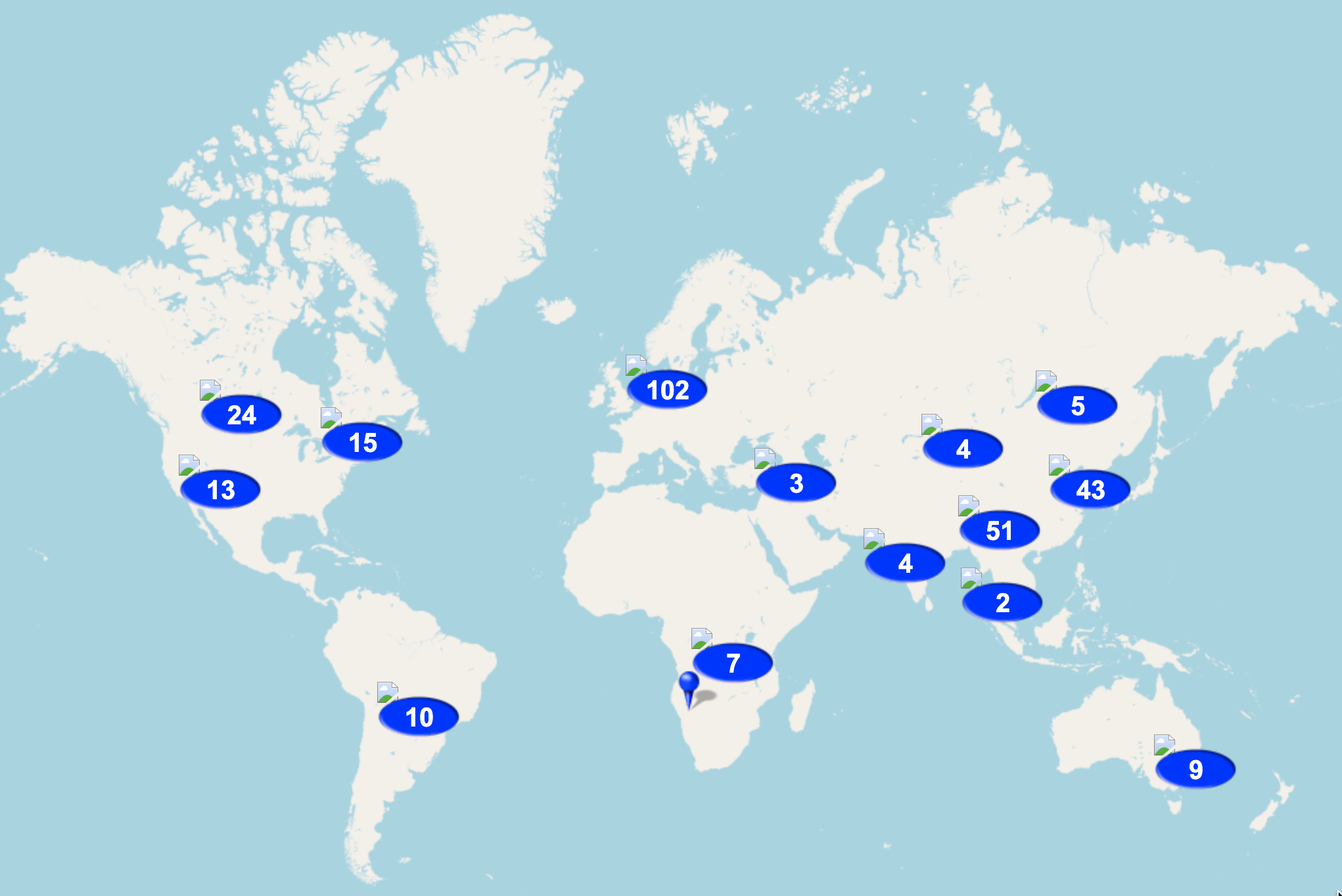
The technology was invented in Europe, so it is unsurprising that there is a great deal of it there. It is equally unsurprising that China has the lion’s share of longer, higher-powered HVDC lines. But as the map shows, HVDC is present on every continent and projects are being announced regularly.
At that, this visualization is built from an incomplete, open-source data set, because it is difficult to keep up with projects. As I noted when asked whether there was as good a visual map of projected HVDC projects as there is for CCS and hydrogen efforts, there isn’t, because unlike hydrogen in pipelines, there isn’t a massive global lobbying, PR, think tank and industry effort promoting it out of deep fear of becoming extinct.
A few notable projects are worth calling out, especially as they are in places that were considered energy islands that would have to go it alone. Israel, for example, is modeled as an energy island and separate grid in the Stanford 100% renewables by 2050 work that Mark Z. Jacobson leads. But construction is under way for an HVDC interconnector from Greece through Cyprus to Israel. It has a 1,208-kilometer run, mostly under water, a two-way capacity of 2 GW and is intended to connect Israel more deeply to the European electricity system.
What is an interconnector versus a transmission line? In this context, the key difference is that it goes both ways. If there is a surplus at one end and a deficit at the other, electrons flow that way. If the surplus and deficit reverse, then the flow reverses.
Iceland is another outlier, being 850 km from the tip of Scotland and 1,000 km from Norway across the stormy North Atlantic. It is already doing very well with geothermal resources, but there has been an interconnector in the works for years to enable it to share in the European energy grid. The Icelink would be over 1,000 km and in the range of a GW of capacity.
The UK had been looking to bring Moroccan wind and solar, firmed by storage, 3,800 km north through coastal waters to the country. The Xlinks Morocco-UK Power Project was designed to bring 3.6 GW of firmed electricity to the UK for much of the day, roughly in the same energy-service class as Hinkley Point C but with wind, solar, storage and HVDC instead of nuclear reactors. The cable route would have hugged the coastline to avoid deep-water risks and costs, and the project required so much HVDC cable that it would have consumed years of European manufacturing capacity. Xlinks therefore developed its own HVDC cable manufacturing facility as part of the initiative.
That project is also a useful cautionary example. In June 2025, the UK government decided not to continue consideration of support for the Morocco-UK project, including the requested Contract for Difference. The government’s statement pointed to strategic alignment, first-of-a-kind cumulative risk and a preference for lower-risk domestic alternatives. Xlinks says it continues to explore alternatives. The lesson is not that long subsea HVDC is technically implausible. It is that electrons still need counterparties, contracts, planning consent, cable supply chains and political alignment.
For the political and physical islands of Asia, such as South Korea, Singapore, Indonesia and the Philippines, there are competing and overlapping proposals for HVDC interconnectors between China’s HVDC Asian Super Grid efforts and the Association of Southeast Asian Nations power grid, which is also shaping up.
A proposal for an HVDC cable from Australia to Singapore, Sun Cable, has been through years of corporate turbulence and strategic reframing, including hydrogen distractions. The likelihood is that a variant of the concept will keep returning, possibly connecting into the ASEAN and China grids through relatively nearby Indonesia and the Philippines. The electricity geography remains better than the molecule story.
Japan’s current HVDC connectors between and within its islands block out the country entirely in this visualization. China’s Asian supergrid proposals include interconnectors with Japan. As Japan is only 180 km from South Korea, 765 km from mainland China and 1,700 km from the Philippines, those links are comparatively easy in engineering terms. However, despite the prevalence of HVDC in Japan, the country has spent years focused on importing hydrogen and derivatives from Australia and similar sun-drenched locales to power its economy. This too shall pass, but Japan being Japan, will likely take a decade or more longer before energy sanity prevails.
A few other completed, proposed and under-construction links are worth mentioning. Canada’s Quebec has massive amounts of hydroelectricity and the largest wind farm in Canada, something most Canadians don’t know, and has been supplying New England and New York with clean electricity through high-voltage alternating current lines since about 1980. The 545 km, 1.25 GW Champlain Hudson Power Express to New York has now been completed and can deliver Quebec hydropower directly to New York City. The US Energy Information Administration noted that the line reached commercial operation in May 2026 after three years of construction, and that Canadian imports rose sharply during a July heatwave with some of the power flowing through CHPE.
That is the new-pipeline thesis as operating infrastructure. It is also a reminder that HVDC is still infrastructure, not magic. The same EIA note recorded a June outage and another July outage for repairs. Reuters reported a subsequent cable-related outage on the US portion of the line during a heatwave. That does not weaken the HVDC case. Pipelines rupture, compressor stations fail, power lines trip and cables have faults. The point is that HVDC should be treated as critical infrastructure with maintenance, protection, redundancy and outage planning, not as a magic wire.
The US Southwest now has an even larger operating example. SunZia is fully operational, using Hitachi Energy’s HVDC Light technology to move up to 3,000 MW of clean power from New Mexico to Arizona across roughly 885 km of overhead lines. Hitachi Energy said SunZia was its third HVDC Light system commissioned in six months across the US and Canada, together adding 5,450 MW of transmission capacity. That is not a hydrogen corridor press release. It is steel, power electronics, rights of way and operating grid capacity.
Europe’s energy crisis and offshore wind buildout have also pushed HVDC from interconnector projects toward grid architecture. The UK already has many HVDC links in operation among North Sea wind farms, its own islands and continental Europe. Ireland, France, Belgium, Norway, Denmark and the Netherlands have become part of a growing mesh of controllable electricity exchange.
In July 2026, Hitachi Energy and Larsen & Toubro announced Nederwiek3 and LanWin5 for TenneT, each a 2 GW HVDC link from North Sea offshore wind to the Dutch and German grids. The projects are part of TenneT’s 2GW Program and point toward interconnected, flexible offshore grid architecture rather than one-off point-to-point power exports. Future links such as LionLink are already embedded in that design logic. HVDC is becoming the electrical spine of offshore energy systems.
In another direction, a 1,200 km subsea cable has been greenlit to bring renewable energy from the Caucasus, linking Georgia to Romania. To the south, in addition to the Israel link, a link from Tunisia in the Maghreb to Sicily has been greenlit. I have been engaged in a small way with the early days of a proposal to link Canada and Europe with a trans-Atlantic 6 GW set of three or four cables, something which sounds absurd until you realize that the first subsea trans-Atlantic cable for telegraph signals was connected 165 years ago along much the same route from Newfoundland to Ireland.
China has also proposed a polar HVDC supergrid to connect all northern hemisphere continents, something technically feasible, if not politically. It would be cheap at about $2 trillion, given the benefits. Pity about the politics for the next 20 years, but politics typically pass.
Aren’t these projects, especially the subsea ones, deeply risky megaprojects?
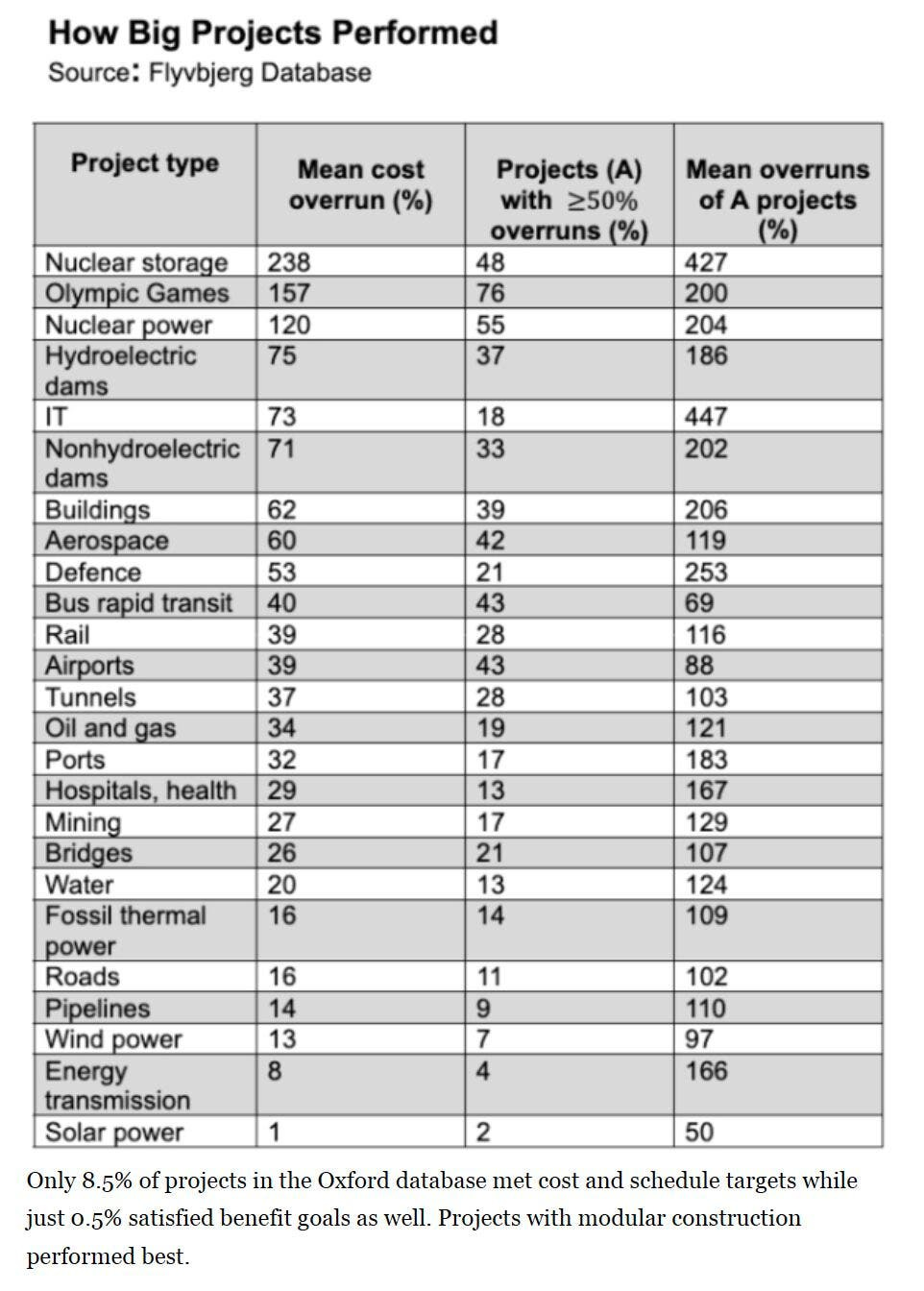
No, not compared with most megaproject categories. Professor Bent Flyvbjerg’s data set of over 16,000 megaprojects includes transmission. While running underwater is higher risk than running over land, transmission remains lower risk than most other categories in terms of cost and schedule overruns. Among other things, no one runs anything along seabeds without vast amounts of planning.
Links in all directions to different wind, water and solar regimes enable vastly broader sharing of low-carbon electricity and reduce storage requirements in most places. HVDC is the technology for those links. Tubes of steel carrying molecules need not apply.
The broad conclusion has strengthened since the original article. HVDC projects can still be delayed, rerouted, litigated, repriced or denied offtake. They are infrastructure. But unlike hydrogen pipeline fantasies, they do not require inefficient conversion of electricity into molecules, compression, leakage management, new end-use equipment and a demand story that repeatedly fails to form. In an electrifying economy, the most direct long-distance energy carrier is increasingly the one the system already wants at the end: electricity.
Subscribe to TFIE Strategy Briefing for transition analysis grounded in physics, infrastructure denominators, system costs and operating evidence.
Updated from an article first published by CleanTechnica.
Very clear and easy to understand for even the most non-technical individual - if I may, I'll direct people here for this article going forward. It's hard work explaining technical stuff to non-technical people, and when I find that someone else has done it well, I share. Thanks!!