

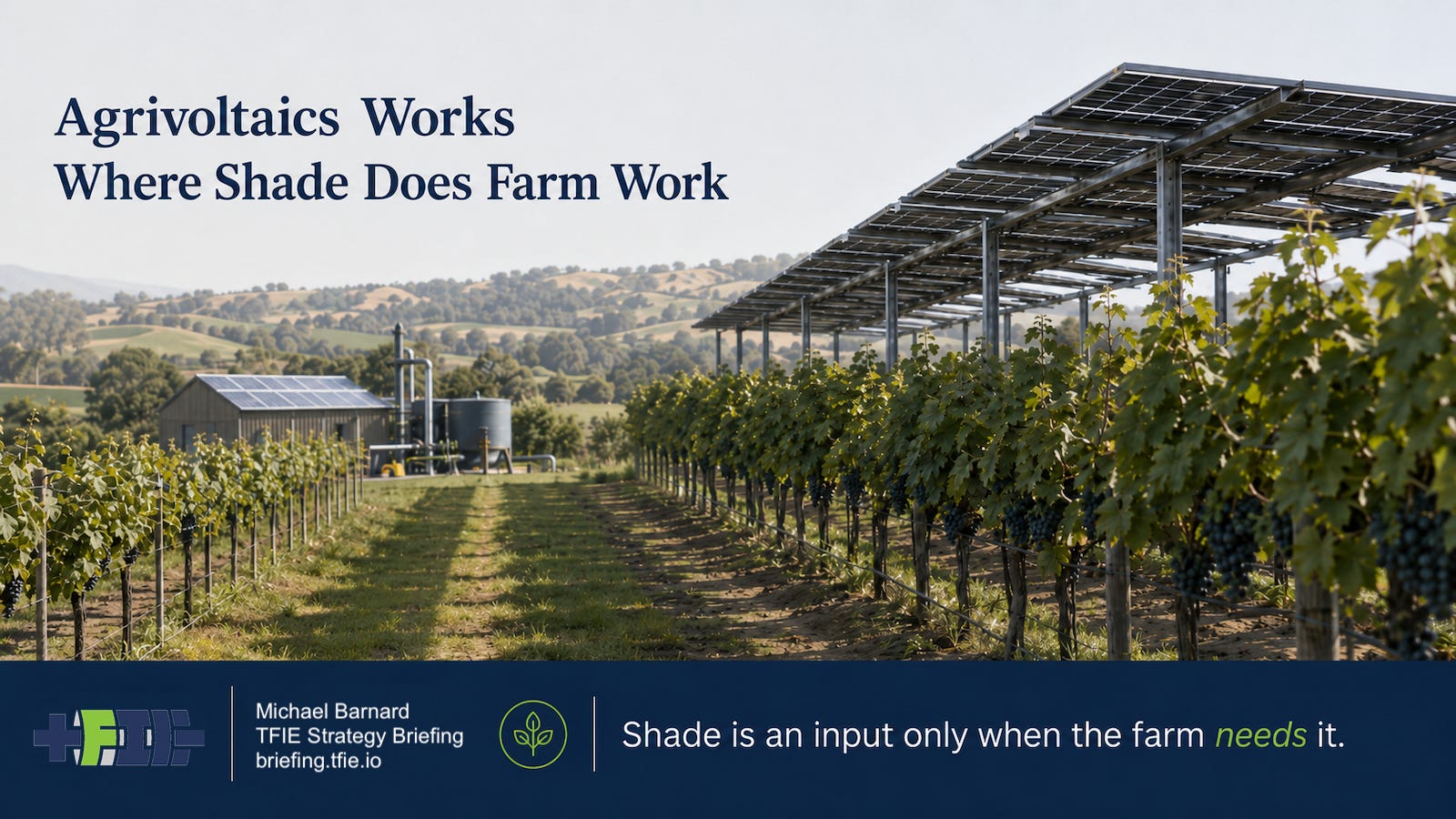
The earlier farm-first assessment of agrivoltaics remains the right starting point. Crop physiology, water, soil, machinery, harvest logistics, farmer authority and farm economics have to shape the solar design rather than being fitted in afterward. The deeper evidence review adds a second test: what farm work is the solar structure actually doing, and is that work valuable enough to justify the structure? That is where many agrivoltaic claims start to weaken, because “solar and farming can share land” is not a sufficient decision test.
Agrivoltaics is being discussed as if it were one pathway, but sheep grazing beneath ordinary solar arrays, transparent structures over berries, dynamic panels over vineyards, vertical bifacial rows beside crops and five-metre steel over wheat are materially different systems. They have different capital costs, crop risks, machinery constraints, electricity profiles and reasons to exist. Grouping them under one label may be useful for public enthusiasm and conference agendas, but it is a poor way to assess deployment, policy, finance or farm value.
This review is not another country ranking. China has scaled the broad category. The United States has meaningful research and practical niches. Europe and Japan remain important for governance, definitions and enforcement. That deployment geography still matters, but the question here is narrower and more useful: which agrivoltaic configurations deserve to scale, and what evidence supports them?
The short answer is that agrivoltaics works where the structure does farm work. Shade is valuable when it relieves a real constraint and expensive when it is just shadow. That farm work can be crop shade in a hot and dry climate, but it does not have to be. It can be reducing sunburn on fruit, moderating heat stress in a vineyard, lowering evapotranspiration for irrigated vegetables, replacing hail nets or rain covers, allowing sheep to graze beneath ordinary solar arrays, preserving machinery-compatible rows, improving field access to electricity, or giving a farmer a credible second revenue stream without turning farming into a stage prop. The test is not whether plants can survive near panels. The test is whether the solar structure creates enough agricultural value to justify itself.
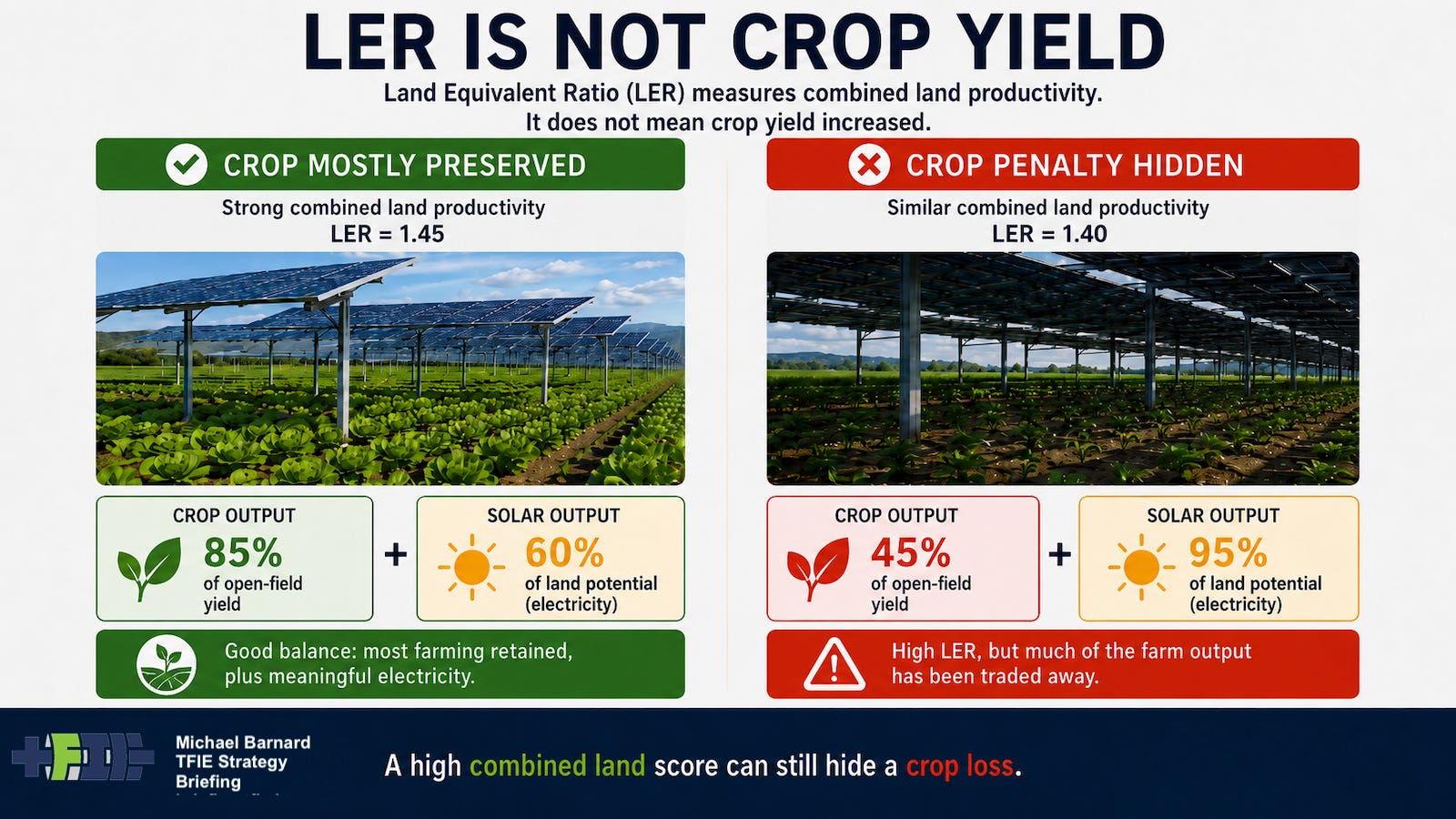
The common denominator error is Land Equivalent Ratio. LER is a useful measure of combined land productivity because it asks how much land would be needed to produce the same crop and electricity separately. It does not answer the crop-yield question by itself. A project can have a strong combined land-use result while still reducing crop output, and that can still be a good project if the electricity gain, water effect, structure cost and farm economics are visible rather than blended into one flattering number.
The evidence points in a clear direction. Agrivoltaics is strongest where the structure either stays cheap or performs valuable farm work. Grazing beneath ordinary solar is a different proposition from building high steel over wheat. A protected vineyard, orchard or berry system is different again, because the structure may replace shade cloth, rain cover, hail protection or crop-support infrastructure. Hot, water-stressed horticulture has a different logic still, because shade can relieve a binding climate constraint. The details matter because the same headline term covers systems with very different economics.
A German field case makes the point sharply: the same elevated structure can clear the test for one crop and fail it for another. That is not a quirk of German agriculture. It is the denominator problem in physical form. The same point applies to farm electrification. More demand from pumps, cooling, refrigeration, drones, packhouses and equipment charging makes local electricity more useful and strengthens the case for farm solar, but it does not by itself pay for putting solar in the air. The structure still has to do farm work.
The public answer is that agrivoltaics is real, conditional and ready to scale in selected configurations. The paid section below unpacks which pathways clear the evidence test, where the economics work, where the claims are overextended, and what would change the verdict. Paid subscribers get the professional layer behind this assessment: the evidence book, pathway scorecard, evidence notes, materiality screen, farm exemplars, denominator checks and update triggers for tracking which agrivoltaic claims are turning into durable operating evidence.
