

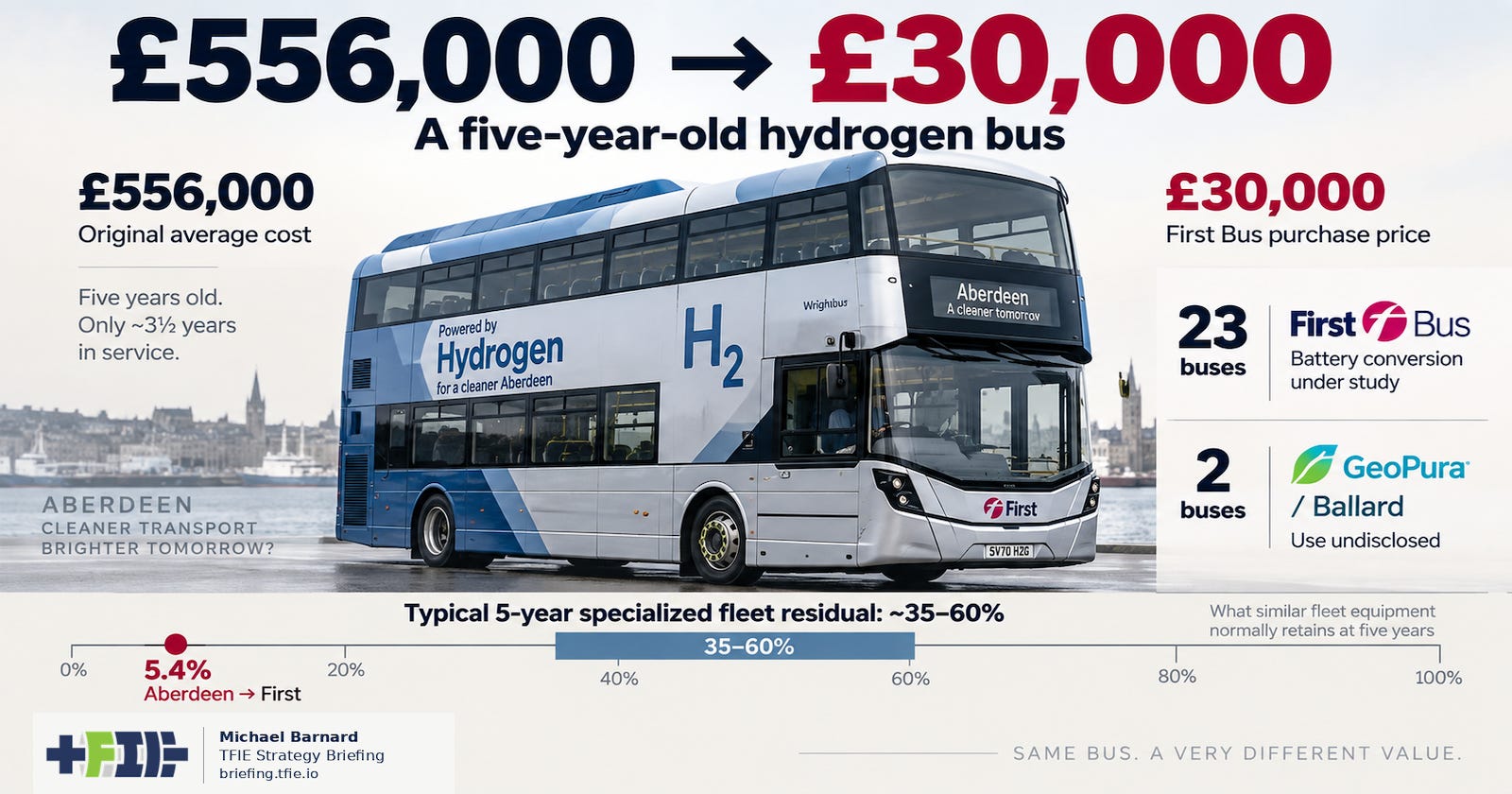
Aberdeen finally has a price for most of its stranded hydrogen double-decker buses, and the number is more revealing than another argument about hydrogen efficiency or operating costs. First Bus is set to pay £30,000 each for 23 Wrightbus StreetDeck Hydroliners that entered service in 2021. GeoPura will pay £126,000 for the remaining two, which it intends to continue operating on hydrogen, although the use case is deeply unclear. Against the approximately £13.9 million Aberdeen City Council originally spent on the 25 buses, the total £816,000 expected from the sales represents a recovery of just 5.9%. The average acquisition cost was about £556,000 per bus. First is paying about 5.4% of that. These are not 15-year-old vehicles reaching the end of their structural lives. They are five-year-old buses with only about three and a half years of actual revenue service before hydrogen supply problems left them parked, according to the confidential council briefing obtained by the Press and Journal.
The fact that Aberdeen City Council owns the buses while First Bus operates them is largely a legacy of the Transport Act 1985 and the deregulation of British bus services outside London, which took effect in 1986. Aberdeen’s former municipal bus operation became Grampian Regional Transport, was privatized in 1989 and eventually became part of FirstGroup. Today First Aberdeen and Stagecoach North Scotland both operate commercially in and around the city, while public authorities can still subsidize services and finance or own assets. That separation between public planning and capital on one side and private operation on the other is one of the subjects of my forthcoming case study and strategic guidance report on the UK’s natural experiment in transit privatization versus centralization. Aberdeen is a useful example because the organization absorbing the capital loss on these buses is not the organization that operated them or is now deciding whether they are worth salvaging.
The other bids make the £30,000 figure much more meaningful. According to the same council briefing, Aberdeen received four additional bids after testing the market. Two organizations proposed taking buses for use in the Outer Hebrides or Namibia for free, while another offered £1 per bus. First’s offer therefore should not be read simply as the result of an unusually hard negotiation. Aberdeen actually went looking for buyers and discovered what prospective purchasers were prepared to pay. When the city first announced its disposal plans, I argued that there was no deep or liquid secondary market for used hydrogen buses and that expectations of substantial capital recovery were optimistic. The market test has now occurred.